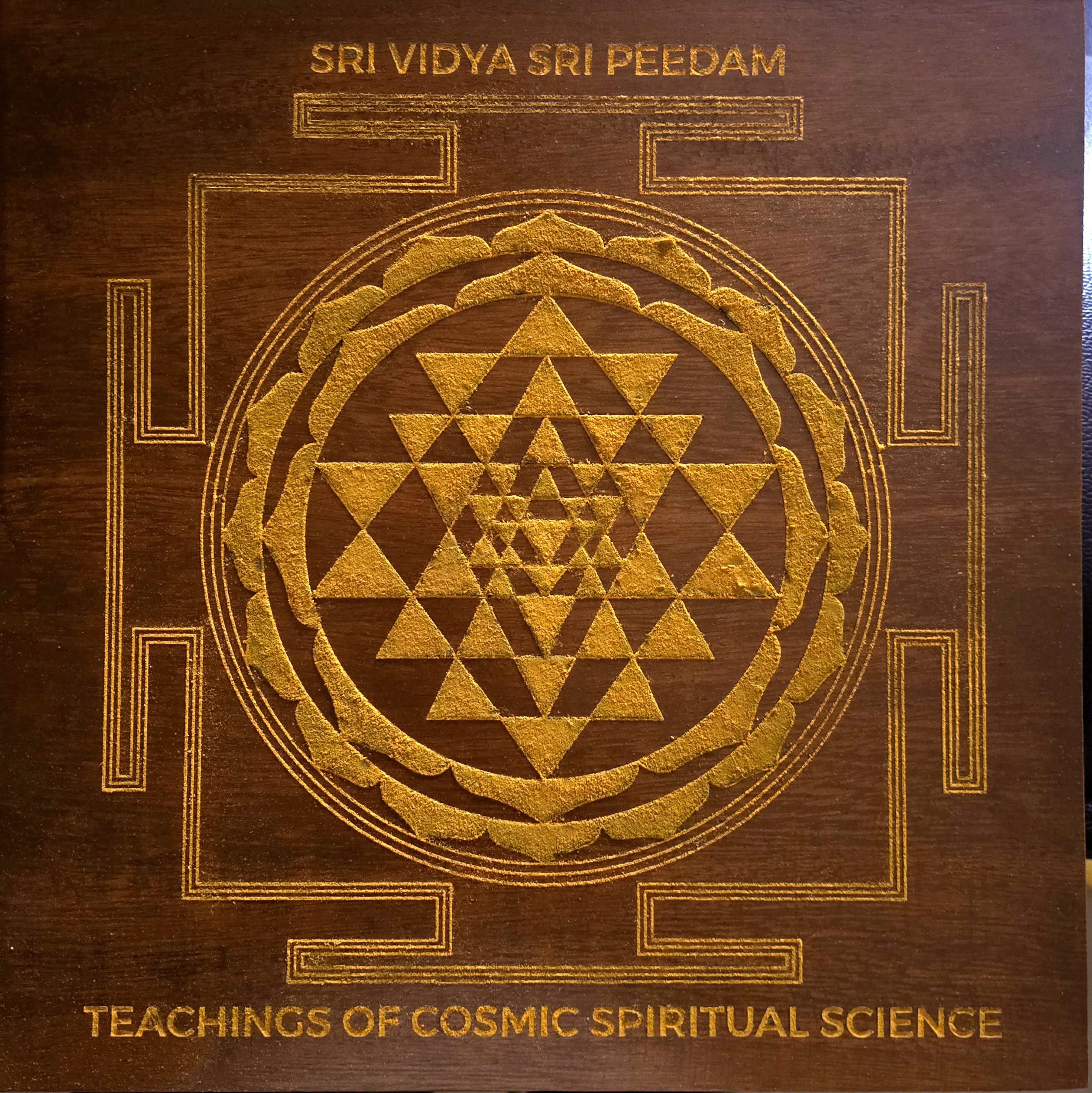
ஸ்ரீ வித்யா என்பது இந்து தந்திர மரபில் உள்ள மிக ஆழமான, முழுமையான, மற்றும் அதீத புனிதமான ஆன்மிகப் பாதைகளில் ஒன்றாகும். இது வெறும் வழிபாட்டு முறையல்ல — உணர்வின் உயிரோடும் அறிவியல். இது லலிதா திரிபுரசுந்தரி — மூன்று நிலைகளின் அழகிய தேவி — எனப்படும் பரம சக்தியை உணர்வதற்காக அர்ப்பணிக்கப்பட்ட ஒரு பரிபூரண மார்க்கம்.
“வித்யா” என்ற சமஸ்கிருதச் சொல் அறிவு, ஞானம், வெளிப்படுத்தப்பட்ட அறிவியல் என்பதைக் குறிக்கும். அதனால் ஸ்ரீ வித்யா என்பது “ஸ்ரீ (தெய்வீக தாய்) பற்றிய புனித அறிவு” என்ற பொருளை மட்டுமல்ல, தனிநிலை ஆன்மா தன்னை பிரபஞ்சத் தாயோடு ஒன்றென உணரும் அறிவை குறிக்கிறது.
ஸ்ரீ வித்யாவின் பரம தத்துவம்
ஸ்ரீ வித்யா தத்துவத்தில், 🔸️தேவி பிரபஞ்சத்துக்குள் இருக்கும் ஒரு தெய்வம் அல்ல — அவளே பிரபஞ்சத்தின் மூலமும், பொருளும், அதைக் கடக்கும் பரம நிலையும் ஆவாள். 🔸️பிரபஞ்சம் அவளின் வெளிப்பாடு- காலம், இடம், வடிவு, சக்தி, உணர்வு — அனைத்தும் அவளிலிருந்தே எழுகின்றன.
பஞ்சக்ருத்யங்கள் — 🔸️ஸ்ருஷ்டி (படைப்பு) 🔸️ஸ்திதி (பாதுகாப்பு) 🔸️ஸம்ஹாரம் (லயம்) 🔸️திரோதானம் (மறைவு) 🔸️அனுக்ரஹம் (அருள்) — இவை அனைத்தும் அவளின் நித்திய லீலைகள்
இரட்டைத்தன்மை (Dualism) போதிக்கும் மார்க்கங்களைப் போல அல்லாமல், ஸ்ரீ வித்யா — தெய்வமும் உலகமும், ஆன்மாவும் பொருளும் வெவ்வேறானது அல்ல என்று அறிவுறுத்துகிறது.
🌈 இருப்பெல்லாம் சக்தி — நிலைநிலையாக வெளிப்படும் உணர்வு மட்டுமே.
🔺 ஸ்ரீ சக்கரம் –
🔸️தேவியின் உயிருள்ள திருமேனி 🔸️ஸ்ரீ வித்யா உபாசனையின் மையச் சின்னம்
ஸ்ரீ சக்கரம் (ஸ்ரீ யந்திரம்) — ஒன்பது ஒன்றோடொன்று ஊடுருவும் முக்கோணங்களால் உருவான, ஒரு பன்முக, பன்மையாழ்வுடைய தெய்வ வடிவம். 🔸️ நான்கு மேல்நோக்கிய முக்கோணங்கள் — சிவ தத்துவம் (சுத்த சைதன்யம்) 🔸️ஐந்து கீழ்நோக்கிய முக்கோணங்கள் — சக்தி தத்துவம் (செயற்பாட்டு சக்தி) 🔸️ இவை ஒன்றிணைந்து 43 சிறு முக்கோணங்களை உருவாக்கி நவாவரண (ஒன்பது ஆவரணங்கள்) எனும் தெய்வ மண்டலத்தை அமைக்கின்றன.
மையத்தில் இருக்கும் பிந்து — அங்கே: 🔸️ பார்ப்பவன்–பார்க்கப்படுவது மறைகிறது 🔸️உபாசகன்–உபாச்யம் ஒன்றாகிறது 🔸️காலம், இடம், தனித்தன்மை கரைந்து சுத்த அறிவுணர்வாக மாறுகிறது.
ஸ்ரீ சக்கரம் ஒரு சின்னம் மட்டுமல்ல — அது தேவியின் உயிருள்ள பிரபஞ்சத் தேகம். அதன் உபாசனை என்பது முழுப் பிரபஞ்சத்தையும் அதன் நுண்ணிய நிலையிலே வழிபடுதல்.
🔊 மந்திரம் – தேவியின் ஒலி வடிவு
ஸ்ரீ வித்யாவில் மந்திரம் ஒரு பிரார்த்தனை அல்ல — அது தேவியே, அதிர்வெண் வடிவில்.
பஞ்சதசி மந்திரம் (15 எழுத்துகள்): ஸ்ரீ வித்யாவின் அடிப்படை மந்திரம்பஞ்சதசி (பஞ்சதசாக்ஷரி). 🔸️ முழு ஸ்ரீ சக்கரமும் இதில் குறியிடப்பட்டுள்ளது 🔸️ பருத்த நிலையிலிருந்து நுண்ணிய உணர்விற்கு செல்லும் பாதை இதில் உள்ளது 🔸️ உபாசகருக்குள் உறங்கிக் கிடக்கும் தெய்வ சக்தியை இது எழுப்புகிறது
ஷோடசி மந்திரம் (16 எழுத்துகள்): சில பரம்பரைகளில்ஒரு 16-ஆவது எழுத்து சேர்க்கப்பட்டு ஷோடசாக்ஷரி உருவாகிறது — தெய்வ பரிபூரணத்தின் முழுமை யை குறிக்கும்.
ஷோடசி மஹாமந்திரம் (32 எழுத்துகள்): உயர்ந்த நிலையில் வெளிப்படும் 32 எழுத்துகளுடைய 🔸️ஷோடசி மஹாமந்திரம் — திரிபுரசுந்தரியின் பரம ஒலி தேகம் 🔸️மந்திரம், யந்திரம், தந்திரம், உணர்வு — எல்லாம் ஒன்றாக கரையும் பரிபூரண அனுபவம்
ஸ்ரீ வித்யாவின் மைய உண்மை
ஸ்ரீ வித்யாவின் சொல்வது ஒரே உண்மை:
🔸️தேவதா 🔸️மந்திரம் 🔸️குரு 🔸️சாதகன் — இவை நான்கும் வேறல்ல; ஒன்றே.
*சரியான தீட்சை, ஒழுங்கான உபாசனை, மற்றும் உள்முதிர்ச்சி மூலம்: 🔸️ மந்திரம் வெளிப்புற ஒலியல்ல 🔸️யந்திரம் ஒரு பொருளல்ல 🔸️குரு வெளியில் இல்லார் (என்பதை அறிந்து) 🔸️ தேவி — தன்னுள்ளேயே உணரப்படுகிறார்
இது அத்வைத சாக்த தந்திரம் — அழகு, ஒழுங்கு, அன்பு, மற்றும் உள் விரிவின் வழி தன்னுணர்வு.
அருளும் பொறுப்பும் – ஸ்ரீ வித்யா மார்க்கம்
ஸ்ரீ வித்யா பாரம்பரிய குரு–சிஷ்ய பரம்பரையால் மட்டுமே பரம்பரை வழியாக வழங்கப்படுகிறது, ஏனெனில்: 🔸️ வழிகாட்டல் இல்லாத மந்திரம் உயிர்ப்படாது 🔸️தூய்மை இல்லாத சக்தி குழப்பத்தை உண்டாக்கும் 🔸️ பணிவு இல்லாத அறிவு விடுதலையல்ல — பந்தமே
சரியாகப் பயிலப்படும் போது, ஸ்ரீ வித்யா அளிப்பவை: 🔸️உள்தெளிவு மற்றும் மன நுட்பம் 🔸️உலக வாழ்க்கை– ஆன்மிக வாழ்க்கை சமநிலை 🔸️ உயர்ந்த புத்திசாலித்தனம் (ப்ரஜ்ஞா) 🔸️கர்ம பந்தங்களின் மெதுவான கரைவு 🔸️ தெய்வீக தாயைத் தன்னுள்ளே நேரடியாக அனுபவித்தல்
ஸ்ரீ வித்யா ஒரு நம்பிக்கை அல்ல. அது — தேவியின் வழி தன்னுணர்வுக்கான நேரடி தொழில்நுட்பம்.
“ஸ்ரீ வித்யா தந்திரம்: பண்டைய ஞானமும், நவீன நன்மைகளும்”
ஸ்ரீ வித்யா உபாசனை என்பது வெறும் ஒரு பயிற்சி மட்டுமல்ல, அர்ப்பணிப்பு, தூய்மை மற்றும் ஆன்மீக வளர்ச்சிக்கு ஆழ்ந்த அர்ப்பணிப்பு தேவைப்படும் ஒரு வாழ்க்கை முறையாகும். இது சடங்குகள், தியானம் மற்றும் மந்திரங்களை ஓதுதல் ஆகியவற்றைப் பயன்படுத்தி உடல், மனம், ஆன்மா, ஆற்றல் ஆகியவற்றைத் தூய்மைப்படுத்திதெய்வீகத்துடன் ஆழமான தொடர்பை ஏற்படுத்த உதவும் ஒரு மிகவும் கட்டமைக்கப்பட்ட அணுகுமுறையாகும்.
ஸ்ரீவித்யா உபாசனாவின் இறுதி இலக்கு சுயஉணர்தல் மற்றும் ஏராளமான செல்வச் செழிப்பு – வாழ்க்கையில் ஒருவரின் உண்மையான நோக்கத்தைக் கண்டறிவதும், இருப்பின் ஆழமான அர்த்தத்தைப் புரிந்துகொள்வதும் ஆகும். லலிதா திரிபுர சுந்தரியை வழிபடுவதன் மூலம், பயிற்சியாளர் ஈகோவைக் கலைத்து, பிரபஞ்ச உணர்வோடு ஒன்றிணைந்து, தெய்வீகத்துடன் ஒன்றி இருப்பதன் பேரின்பத்தை அனுபவிக்க முயல்கிறார்.
She primordial source, without beginning or cause, is light and non-light, divine bliss and supreme beauty. She is the ultimate mother, the transcendental state of Samadhi, and the jewel of the inner mind. Her presence entered my consciousness and resides within my heart.
– Tirumantram (1114)
ஆகமங்கள்
சமஸ்கிருத இலக்கியங்களானது ஆறு மரபுவழி இலக்கியங்களாகவும் மற்றும் நான்கு மதச்சார்பற்ற இலக்கியங்களாகவும் வகைப்படுத்தப்பட்டுள்ளன.
மரபுவழி இலக்கியங்கள்: (i) ஸ்ருதி, (ii) ஸ்மிருதி, (iii) இதிஹாசம், (iv) புராணம், (v) ஆகமம் மற்றும் (vi) தர்சனம்;
மதச்சார்பற்ற இலக்கியங்கள்: (i) சுபாஷிதா, (ii) காவியம், (iii) நாடகம் மற்றும் (iv) அலங்காரம்.
ஆகமங்கள் என்பது இறை வழிபாட்டின் இறையியல் தத்துவங்கள் மற்றும் நடைமுறை கையேடுகள் ஆகும். அவற்றில் தந்திரங்கள், மந்திரங்கள் மற்றும் யந்திரங்கள் அடங்கும். இவைகள் கடவுளின் வெளிப்புற வழிபாட்டு முறைகள், சிலைகளின் உருவகம் மற்றும் உருவ தத்துவங்கள், கோவில்களின் அமைப்பு விதிகள் போன்றவற்றை விளக்குகின்றன. அனைத்து ஆகமங்களும் (i) ஞானம் அல்லது அறிவு, (ii) யோகம் அல்லது செறிவு, (iii) க்ரியா அல்லது உருவாக்குதல் / செய்தல் (making), மற்றும் (iv) சார்யா அல்லது செய்தல் (doing) ஆகியவற்றை உபசாரம் செய்கிறது. மேலும், பொருள்களின் தொடக்கம் பற்றிய ஆய்வு(ஆன்டாலஜி), பிரபஞ்சவியல் (காஸ்மோலஜி) , விடுதலை (லிபரேஷன்), பக்தி, தியானம், மந்திரங்களின் தத்துவம், மாய வரைபடங்கள் (யந்திரம்), வசீகர மந்திரங்கள் மற்றும் சூட்சும மந்திரங்கள், கோயில் கட்டுதல், தெய்வ உருவங்கள் செய்தல், உள்நாட்டு அனுசரிப்புகள் (கடைபிடித்தல் / வரைமுறைகள்), சமூக விதிகள் மற்றும் பொது விழாக்கள் பற்றிய விரிவான விவரங்களையும் அவை வழங்குகின்றன.
ஆகமங்கள் வைணவம், சைவம், சாக்தம் என மூன்று பிரிவுகளாகப் பிரிக்கப்பட்டுள்ளன. இந்து மதத்தின் மூன்று முக்கிய பிரிவுகளான வைஷ்ணவம், சைவம் மற்றும் சாக்தம் ஆகியவை அந்தந்த ஆகமங்களின் அடிப்படையில் தங்கள் கோட்பாடுகளையும் உறுதியான நம்பிக்கைகளையும் அடிப்படையாகக் கொண்டவை. வைஷ்ணவ ஆகமங்கள் அல்லது பஞ்சராத்ர ஆகமங்கள் கடவுளை விஷ்ணுவாக போற்றுகின்றன. சைவ ஆகமங்கள் கடவுளை சிவன் என்று போற்றுகின்றன மற்றும் சைவ சித்தாந்தம் எனப்படும் ஒரு முக்கியமான தத்துவப் பள்ளியை உருவாக்கியுள்ளன. சாக்த ஆகமங்கள், அல்லது தந்திரங்கள், தேவியின் பல பெயர்களில் ஒன்றின் கீழ் கடவுளை உலகின் தாய் என்று மகிமைப்படுத்துகின்றன. ஆகமங்கள் வேதங்களாக அதிகாரத்தைப் பெறவில்லை, ஆனால் வேதங்களுக்கு விரோதமானவை அல்ல. அவை அனைத்தும் உணர்விலும் குணத்திலும் வேதத்திற்கு ஒப்பானவை. அஃதாவது, நம்பிக்கைகள், நடைமுறைகள் அல்லது தத்துவங்கள் போன்றவை, வேதங்களின் போதனைகளில் ஆழமாக வேரூன்றிய சாரத்தையும் மதிப்புகளையும் பகிர்ந்து கொள்கிறது. இது ஆன்மீகத் தேடல், நெறிமுறை நடத்தை மற்றும் வேத மரபுகளுக்குள் காணப்படும் தெய்வீகத்துடனான தொடர்பு போன்ற கருத்துக்களை வலியுறுத்துகிறது. அதனால்தான் தந்திரங்கள் அதிகாரப்பூர்வமாக சக்தி வாய்ந்ததாக கருதப்படுகின்றன.
தந்திர ஆகமங்கள் சாக்த வழிபாட்டு முறையைச் சேர்ந்தவை. சக்தியை உலகத் தாய் என்று போற்றுகின்றன. இவைகள் கடவுளை சக்திகளின் (ஆற்றல்கள்) அம்சத்தில் மற்றும் பல்வேறு வடிவங்களில் தெய்வீக அன்னையின் சடங்கு வழிபாட்டின் பல படிநிலை படிப்புகளை பரிந்துரைக்கின்றது. தந்திர ஆகமங்களில் எழுபத்தேழு ஆகமங்கள் உள்ளன. இவை சில விஷயங்களில் புராணங்களைப் போலவே இருக்கின்றன. உரைகள் பொதுவாக சிவனுக்கும் பார்வதிக்கும் இடையேயான உரையாடல் வடிவில் இருக்கும். இவற்றில் சிலவற்றில் பார்வதி கேட்ட கேள்விகளுக்கு சிவனும், சிலவற்றில் சிவனின் கேள்விகளுக்கு பார்வதியும் பதில் அளிக்கிறார். இவற்றுள் மகாநிர்வாணம், குலார்ணவம், குலசாரம், பிரபஞ்சசாரம், தந்திரராஜா, ருத்ரயாமலா, பிரம்மயாமலா, விஷ்ணுயாமலா, தோடல தந்திரம் ஆகியவை முக்கியமான படைப்புகள் ஆகும். ஆகமங்கள் பல அமானுஷ்ய நடைமுறைகளை கற்பிக்கின்றன; இவற்றில் சில ஆகமங்கள் ஒரு சிறப்பு உரிமையை அல்லது அனுகூலத்தை அதிகாரங்களை ஒருவருக்கு வழங்குகின்றன, மற்றவை அறிவு மற்றும் சுதந்திரத்தை வழங்குகின்றன. தற்போதுள்ள புத்தகங்களில், மகாநிர்வாண தந்திரம் மிகவும் பிரபலமானது.
குரு மற்றும் தீட்க்ஷை
சாஸ்திரங்கள் தெய்வ உபாசனை தீட்க்ஷைகளை ஒரு ஆன்மீக குருவிடம் மட்டுமே கற்றுக் கொள்ள வேண்டும் என்கிறது. தந்திர யோகா விஷயத்தில் இது இன்னும் உண்மை. சாதகர்கள் மூன்று வகையானவர்கள், அதாவது பசு (விலங்கு), வீர (வீரம்) மற்றும் திவ்ய (தெய்வீக). குருவானவர் உங்களுடைய உடல்,மன, உயிர் தகுதிக்கேற்ற பொருத்தமான ஆற்றலை கண்டறிந்து செயல்படுத்துவார்.
குருவானவர் வேறு யாருமல்ல, உயர்ந்த தெய்வீக அன்னையே, அம்பிகையை உயர்த்துவதற்காக உலகில் அவதரித்தவர். ஒரு தீபம் மற்றொன்றின் சுடரிலிருந்து எரிவது போல, மந்திரம் அடங்கிய தெய்வீக சக்தி குருவிடமிருந்து சீடனுக்குத் தெரிவிக்கப்படுகிறது. சீடன் விரதம் இருந்து, பிரம்மச்சரியத்தைக் கடைப்பிடித்து, குருவிடமிருந்து மந்திரத்தைப் பெறுகிறான். தீட்சை மர்மத்தின் முக்காட்டைக் கிழித்து, வேத நூல்களுக்குப் பின்னால் மறைந்திருக்கும் உண்மையைப் புரிந்துகொள்ள சீடருக்கு உதவுகிறது. இவை பொதுவாக மாய மொழியில் மறைக்கப்படுகின்றன. சுய ஆய்வு மூலம் அவற்றைப் புரிந்து கொள்ள முடியாது. சுய படிப்பு அதிக அறியாமைக்கு வழிவகுக்கும். குரு மட்டுமே, திக்ஷா (தீட்சை) மூலம், வேதங்களைப் படிக்கவும், யோகப் பயிற்சி செய்யவும் சரியான கண்ணோட்டத்தைத் தருவார்.
சீடனின் தகுதிகள்
ஒரு சீடனின் தகுதிகள் தூய்மை, நம்பிக்கை, பக்தி, சாந்தம், உண்மைத்தன்மையுடன் புலன்களைக் கட்டுப்படுத்துபவராக இருக்கவேண்டும். அவர் அறிவாளியாகவும், வேதங்களில் நம்பிக்கை கொண்டவராகவும் இருக்க வேண்டும். அவர் எல்லா உயிர்களையும் நேசித்து, அதை காயப்படுத்தாமல் இருக்க வேண்டும். அவர் விழிப்புடனும், ஊக்கத்துடனும், பொறுமையுடனும், விடாமுயற்சியுடனும் இருக்க வேண்டும். அவர் எப்போதும் அனைவருக்கும் நல்லது செய்ய வேண்டும். எல்லா சாதனாகளும் ஒரு குரு அல்லது ஆன்மீக ஆசிரியரின் தனிப்பட்ட வழிகாட்டுதலின் கீழ் செய்யப்பட வேண்டும்.
நாம் ஒவ்வொரு நாளும் பலவிதமான தாக்கங்களால் சூழப்பட்டிருக்கிறோம், அவை நமது உணர்வையும் விழிப்புணர்வையும் கட்டுப்படுத்துகின்றன. முரண்பாடாக, அவை வழங்கும் தூண்டுதல் மற்றும் காம மிகுதியின் காரணமாக….
We are surrounded by a vast array of influences every day. These influences limit our perception and awareness. Ironically, this is due to the very stimulation and sensual abundance they offer.
– Managurunathan
நான்மரியாதைக்குரிய லலிதா தேவியாகவும், கொண்டாடப்படும் ராதிகாவாகவும், நான் தெய்வீக அன்பின் சாரத்தை உள்ளடக்கியவன். எனது இயல்பு வாசுதேவரின் இயல்பு, அன்பின் வெளிப்பாட்டில் நித்திய கலைத்திறன் கொண்டது. நான் பெண்மையின் தெய்வீகத்தின் உருவகம், ஆதி (யணாதி) பெண், லலிதா தேவி, ஆனால் கிருஷ்ணரின் ஆண்பால் வடிவத்திலும் வெளிப்படுகிறேன்.
As the revered Goddess Lalita and the celebrated Radhika, I embody the essence of divine love. My nature is that of Vasudeva, eternally artistic in expression of love. I am the epitome of feminine divinity and the primordial woman, Goddess Lalita. I also manifest in the masculine form of Krishna.
தந்திரம் என்று அழைக்கப்படும் அமைப்பு எப்போதும் ஆன்மீக பயிற்சியின் ஒரு மறைக்கப்பட்ட மற்றும் ரகசிய வழிபாட்டு முறை என்று கருதப்படுகிறது, இது பயிற்சி பெறாத அல்லது சாதாரண மக்களுக்கு அணுக முடியாதது. இதன் நடைமுறையைப் பற்றிய இரகசியமானது, மக்கள் அல்லது தேடுபவர் மகிழ்வதற்குத் தேவைப்படுகிற வாழ்க்கையைப் பற்றிய சுவாரசியமான நாவலின் கண்ணோட்டத்தில் பார்க்கிறார்கள். ஆனால் இது மக்கள் அல்லது தேடுபவர் பொதுவாகப் பழகியவற்றிலிருந்து வேறுபட்ட விஷயங்களைப் பார்ப்பது. தந்திரத்தின் ஆசிரியர்கள், இந்த பாதையில் ஆர்வமுள்ள தேடுபவர் சமூக மற்றும் மனித கண்ணோட்டத்தை விட அதிகமாக மற்ற விஷயங்களில் ஒரு மனிதாபிமான மற்றும் தெய்வீக கண்ணோட்டத்தை வளர்க்க வேண்டும் என்று நம்புகிறார்கள். தந்திர தாந்த்ரீக முறைகளில் சாமானிய மக்களின் எதிர்பார்ப்பு மிக அதிகம் என்பதால், தந்திரம் ஒரு மூடிய ரகசியமாகவே பாதுகாக்கப்பட்டதாக கருதப்படுகிறது, தந்திரத்தின் நுழை வாயில்கள் திறமையான குருவால் மட்டுமே திறக்கப்படும்.
Siva Sakthi
ஆய்ந்து அறிந்து அறிய முடியாத மனோவாக்கு காயத்துக்கு அப்பாற்பட்ட அந்த அரணுக்கு இவளே எல்லாமாம்! ஆதி சக்தியாக படைத்ததால் இவளே தாய்! சிவத்தோடு சக்தியாக, ஒளியோடு ஒலியாக இரண்டற கலந்து சிவசக்தியாய் நிற்ப்பதால் இவளே மனைவி! சிவசக்தியாய் நின்று உயிரை படைத்து சக்தியாய் இருப்பதால் இவளே மகளுமாவாள்!
She is everything to the universal guardian, Aran/Siva. she is beyond the unfathomable mind, voice, and body. She is Shiva’s mother, as she is the Adi Shakti who created him. She is Shiva’s wife, as her union with Shiva forms Shivashakti, a union of light (Shiva) and sound (Shakti). She is Siva’s daughter. She is the source of the universe’s creation. She draws upon her inherent energies to give birth to and stay the cosmos itself.
–சிவபுராணம் மற்றும் தேவி மகாத்மியம் / Siva Purana & Devi Mahatmyam
சக்தி உபாசனை மார்கத்தில் [உள்ள ஸ்ரீகுல வழிபாடு மரபின்படி], ஸ்ரீ திரிபுரசுந்தரி உபாசனையானது தச மகா வித்யாக்களில் முதன்மையானது. ஸ்ரீ வித்யா தந்திர உபாசனையின் முதன்மை தெய்வம். திரிபுரா உபநிஷத் எனும் சாஸ்திரத்தில் அவளை பிரபஞ்சத்தின் முதன்மை சக்தியாக (ஆற்றல், சக்தி) எடுத்துரைக்கிறது. அவள் சுயமாக வெளிப்பட்டு, பிரம்மா, விஷ்ணு மற்றும் சிவன் ஆகியோரை பிறப்பித்து, அவர்களை ஆட்சி செய்யும் மேலான உச்ச உணர்வு என விவரிக்கப்படுகிறாள். அவளே ஆசையின் வடிவில் காமேஸ்வரியாக சிவனின் மடியில் அமர்ந்திருப்பதாகவும், அவளின் யந்திரமான ஸ்ரீ சக்கரத்தியிலிருந்து வளர்வதாகவும் சித்தரிக்கப்படுகிறாள் (பிரபஞ்சம் விரிவாக்கம்)
ஸ்ரீ என்ற வார்த்தை சமஸ்கிருதத்தில் இருந்து வந்தது. ஸ்ரீ, அதாவது “செல்வம்”, “அருள்”, “தெய்வீகம்” அல்லது “செழிப்பு”; வித்யா என்றால் அறியும் அறிவு, அதாவது “ஞானம்”.
திரிபுரம் என்பது மூன்று உலகங்களைக் குறிக்கிறது. அதாவது, நாம் இருக்கும் இந்த அண்டம், இந்த அண்டம் இருக்கும் பேரண்டம், பேரண்டங்கள் இருக்கும் பிரபஞ்சம் (இணைப் பிரபஞ்சம்) என்ற ஒட்டுமொத்த அண்ட சராசரங்களையும் குறிக்கும், அல்லது நாம் வாழும் இந்த உலகம், மேல் மற்றும் கீழ் உலகம் ஆகிய மூன்று உலகங்களைக் குறிக்கும். மேலும் தெளிவாகச் சொல்வதென்றால், ஆத்ம சக்தி, ஜீவ சக்தி மற்றும் பரசக்தி ஆகியவற்றை குறிக்கும். அதாவது பேரண்ட பிரபஞ்ச சக்தியைக் குறிக்கும்.
நமது பிறப்பின் நோக்கம் “உள் ஒளி – ஆத்ம ஜோதி“யைக் கண்டறிவதும், நமது “தனிப்பட்ட ஆன்மா உணர்வு – ஜீவ ஜோதி“யை அனுபவிப்பதும், இறுதியில் நமக்குள் வசிக்கும் “உச்ச உணர்வு – பர ஜோதி”யுடன் ஒன்றிணைவதும் ஆகும்.
The purpose of our birth is to discover the “Inner Light – Atma Jyoti”. We must experience our “individual soul consciousness – Jiva Jyoti”. Ultimately, we unite with the “Supreme Consciousness – Para Jyoti” that resides within us.
– Managurunathan
Sri Lalita Tripurasundari
The manifestation of Shakti, who is “the most beautiful in the three worlds.” The three worlds could variously be described as:
● The three states of consciousness – Sleeping, Waking, and Dreaming State.
● The three aspects of humanity – the Physical Body, the Causal Body, and the Astral Body.
● The three aspects of the universe – Matter, Energy, and Thought.
● The three aspects of energy – Iccha Shakti (the power of will), Jnana Shakti (the strength of knowledge), and Kriya Shakti (the power of action).
Tripurasundari is “the one who plays. “The Hindu spiritual tradition asserts that the whole of creation is nothing more than a beautiful, charming game or play of the Divine Mother.
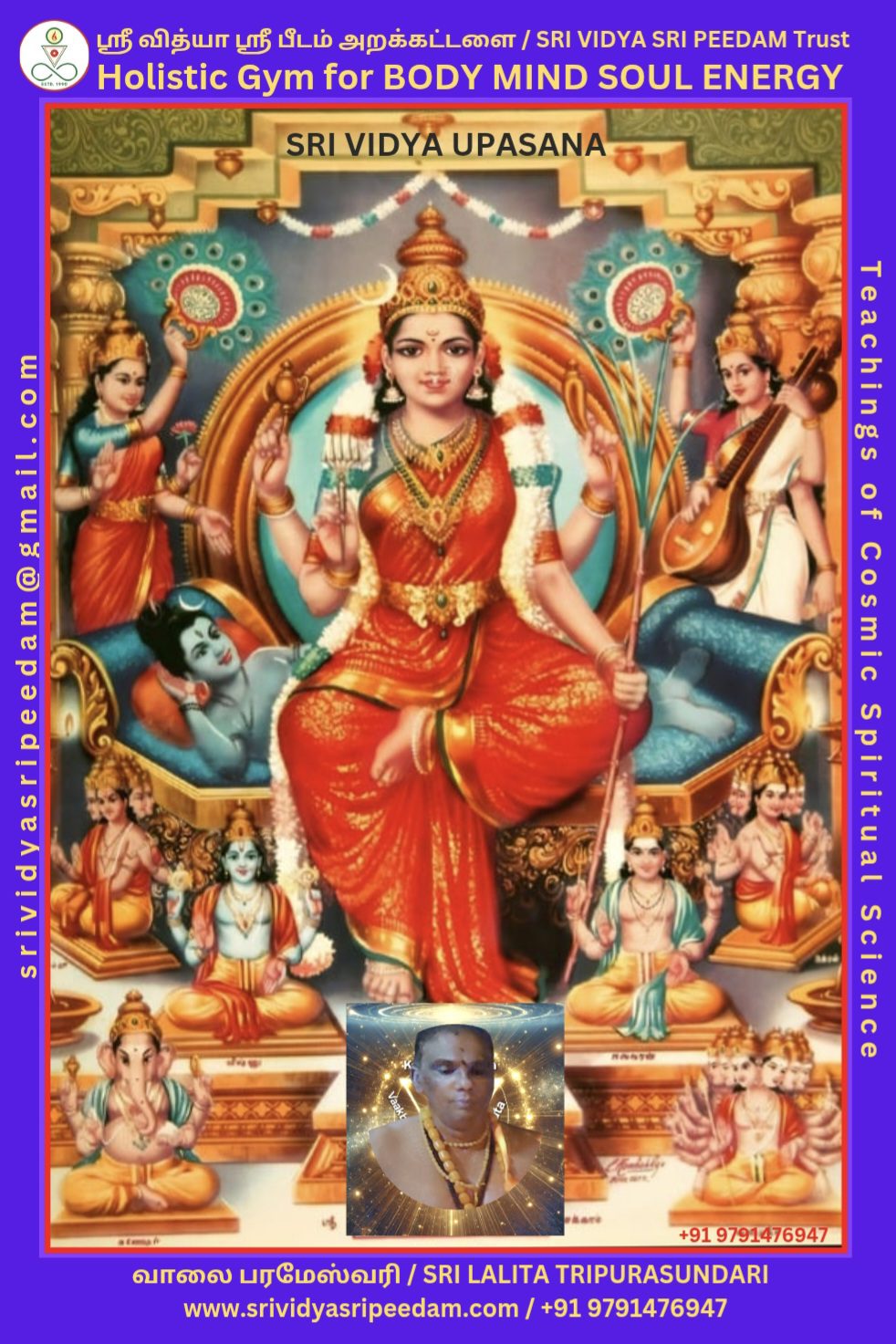
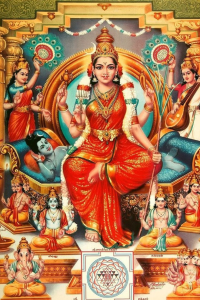
Tripurasundari is shown with four arms holding five arrows of flowers, a goad, a noose, and a sugarcane bow.
The five arrows symbolise our five senses; the goad represents repulsion; the noose stands for attachment; the sugarcane bow is an analogy for the mind.
She symbolises our need to purify our awareness and cleanse the mind of unworthy thoughts. She also symbolises wealth.
Lalita Tripurasundari has three manifestations: Sthula, or descriptive, as in an image; Sukshma, or Subtle, as in a mantra; and para, or transcendent, as in a Yantra. The yantra associated with this form of Devi is the Sri Chakra Yantra.
ஸ்ரீ லலிதா திரிபுரசுந்தரி
“மூன்று உலகங்களிலும் மிகவும் அழகானவள்” சக்தியின் வெளிப்பாடு. மூன்று உலகங்களையும் பலவாறு விவரிக்கலாம்:
1. மூன்று நனவு நிலைகள் – தூக்கம், விழிப்பு மற்றும் கனவு நிலை
2. மனித உடலின் மூன்று அம்சங்கள் – பௌதிக உடல், காரண உடல் மற்றும் நிழலிடா உடல்
3. பிரபஞ்சத்தின் மூன்று அம்சங்கள் – பொருள், ஆற்றல் மற்றும் சிந்தனை.
4. ஆற்றலின் மூன்று அம்சங்கள் – இச்சா சக்தி (விருப்பத்தின் சக்தி), ஞான சக்தி (அறிவின் வலிமை), மற்றும் கிரியா சக்தி (செயலின் சக்தி).
திரிபுரசுந்தரி “விளையாடுபவள்.” முழு படைப்பும் தெய்வீகத் தாயின் அழகான, வசீகரமான விளையாட்டு. அவளது விளையாட்டைத் தவிர வேறில்லை என்று இந்து ஆன்மீக பாரம்பரியம் வலியுறுத்துகிறது.
திரிபுரசுந்தரி நான்கு கரங்களுடன் ஐந்து மலர் அம்புகள், ஒரு அங்குசம், ஒரு கயிறு (பாசம்) மற்றும் ஒரு கரும்பு வில் ஆகியவற்றை ஏந்தியபடி காட்டப்படுகிறார். ஐந்து அம்புகள் நமது ஐந்து புலன்களைக் குறிக்கின்றன; அங்குசம் விரட்டலைக் குறிக்கிறது; கயிறு என்பது பற்றுதலைக் குறிக்கிறது; கரும்பு வில் என்பது மனதைக் குறிக்கும் ஒரு ஒப்புமை.
அவள் நம் விழிப்புணர்வைத் தூய்மைப்படுத்தி, மனதைத் தகுதியற்ற எண்ணங்களிலிருந்து சுத்தப்படுத்த வேண்டியதன் அவசியத்தைக் குறிக்கிறாள். அவள் செல்வத்தையும் குறிக்கிறாள்.
ஸ்ரீ லலிதா திரிபுரசுந்தரிக்கு மூன்று வெளிப்பாடுகள் உள்ளன: ஸ்தூலம், அல்லது விளக்கமானது, ஒரு உருவத்தில் இருப்பது போல; சூக்ஷ்மம், அல்லது நுட்பமானது, ஒரு மந்திரத்தில் இருப்பது போல; மற்றும் பரா, அல்லது யந்திரத்தில் இருப்பது போல. தேவியின் இந்த பரா வடிவத்துடன் தொடர்புடைய யந்திரம் ஸ்ரீ சக்ர யந்திரம்.
‘திரிபுரா’ என்ற சமஸ்கிருத வார்த்தை இரண்டு சமஸ்கிருத வார்த்தைகளின் கலவையாகும். “திரி” என்றால் “த்ரயஸ் (மூன்று)”. “புரா” என்றால் ஒரு நகரம் அல்லது கோட்டை. இது மூன்று நகரங்கள் அல்லது கோட்டைகளையும் குறிக்கிறது. இவை தங்கம், வெள்ளி மற்றும் இரும்பினால் ஆனவை. அவை முறையே வானம், காற்று மற்றும் பூமியில் அமைந்திருந்தன. மாயா தேவி, அவற்றை அசுரர்களுக்காகக் கட்டினாள். இது சிவனால் அழிக்கப்பட்ட மூன்று நகரங்களின் புராணத்தைக் குறிக்கிறது. இருப்பினும், “திரிபுரா” என்பது “சிவ சக்தி (சிவ சக்தி)” என்றும் பொருள்படும், அதே நேரத்தில் “சுந்தரி” என்பது “ஒரு அழகான பெண்” என்றும் பொருள்படும்.
தந்திரம் என்றால் “வரையறுக்கப்பட்ட கட்டமைப்பு” என்று பொருள்படும். அதாவது ஆன்மீகத்தின் ஆழ்ந்த நடைமுறைகளை குறிக்கிறது. இந்த ஸ்ரீ வித்யா பயிற்சி பேரண்ட ஆற்றலை உள்நோக்கி செலுத்துகிறது, தெய்வீகத்தை உணரவைத்து அதனுடன் ஒன்றிணையும் தந்திரத்தை போதிக்கிறது. தந்திரம் என்பது பாரம்பரியத்தின் உண்மையான உபாசனை முறைகளை குறிக்கும்.
புராண கதைகள்
இந்து மதத்தில் மும்மூர்த்திகள், திரி மூர்த்திகள் என்று அழைக்கப்படும் மூன்று கடவுள்களில் சிவன் முக்கியமானவர். சிவன் தக்ஷனின் மகளான சதியை மணந்தார். தக்ஷனும் சிவனும் ஒத்துப்போகவில்லை, அதன் விளைவாக, தக்ஷன் சிவனை அவர் நடத்திய ஒரு பெரிய யாகத்திற்கு அழைக்கவில்லை. ஆனால், சிவனின் எதிர்ப்பையும் மீறி சதி அந்த விழாவில் கலந்து கொள்ளச் சென்றாள். சதியின் முன்னிலையில் தக்ஷ்சன் சிவனை அவமதித்ததால், சதி தனக்கு ஏற்பட்ட அவமானத்தை போக்க தீயில் குதித்து தற்கொலை செய்து கொண்டாள். இதன் விளைவாக, சிவன் தக்ஷனின் தலையை துண்டித்தார், ஆனால் சிவனின் கோபம் தணிந்த பிறகு, ஆட்டுத் தலையுடன் தக்ஷ்சனை உயிர்த்தெழுப்பினார். இந்த சம்பவம், அதாவது அவரது மனைவியின் மரணம், சிவனை வருத்தப்படுத்தியது. அதனால் மீண்டும் அவர் ஆழ்ந்த தியானத்தில் ஆழ்ந்தார். சதியானவள் மலை அரசன் ஹிமாவத் மற்றும் அவரது மனைவி அப்சரா மேனாவின் மகள் பார்வதியாக மறு அவதாரம் எடுத்தார். ஆதி பராசக்தி (சக்தியின் மிக உயர்ந்த வடிவம் அல்லது நிர்குண பிரம்மம்) அவர்களுக்கு வழங்கப்பட்ட வரம் காரணமாக இது சாத்தியமானது.
சிவன் மற்றும் பார்வதியின் மகனால் மட்டுமே கொல்லப்பட முடியும் என்ற வரம் பெற்ற தாரகாசுரனின் தொல்லைகளை தேவர்கள் எதிர்கொண்டனர். எனவே சிவன் மற்றும் பார்வதியிடம் இருந்து ஒரு மகனைப் பெறுவதற்காக, தேவர்கள் அன்பின் கடவுளான மன்மதனை நியமித்தனர். மன்மதன் தன் மலர் அம்புகளை சிவன் மற்றும் பார்வதியிடம் காதல் உணர்வுகளைத் தூண்டுவதற்காக எய்தினான். தியானம் கலைக்கப்பட்டதால் கோபத்தில், சிவன் தனது மூன்றாவது கண்ணைத் திறந்து காதல் கடவுளான மன்மதனை சாம்பலாக்கினார். ஆனால் தேவர்களும், மன்மதனின் மனைவி ரதிதேவியும், மன்மதனுக்கு உயிர் கொடுக்கும்படி சிவனிடம் வேண்டினார்கள். அவர்களின் வேண்டுகோளுக்கு செவிசாய்த்த சிவன், மன்மதனின் சாம்பலை உற்று நோக்கினார். சாம்பலில் இருந்து பண்டாசுரன் தோன்றினான், அவன் உலகம் முழுவதையும் வலிமையற்றதாக மாற்றி ஷோணித புரா என்ற நகரத்தை உருவாக்கி ஆட்சி செய்தான், அதன் பிறகு அவன் தேவர்களைத் தொந்தரவு செய்யத் தொடங்கினான். தேவர்கள் பின்னர் நாரத முனிவர் மற்றும் திரிமூர்த்திகளின் ஆலோசனையை நாடினர், அவர்கள் நிர்குண பிரம்மத்தின் உதவியை நாடுமாறு அறிவுறுத்தினர், அதாவது சத்-சித்-ஆனந்த (இருப்பு-உணர்வு-ஆனந்தம்). பிரபஞ்சத்தின் நன்மைக்காக. இதற்காக, ஒரு மகா யாகம் (பெரிய தியாகம்) செய்யப்பட்டது, அங்கு முழு படைப்பும், அதாவது மொத்த பிரபஞ்சமும் ஆகுதியாக வழங்கப்பட்டது. அந்த அக்கினியிலிருந்து மகா திரிபுர சுந்தரி வெளிப்பட்டாள். காமேஸ்வரி காமேஷ்வரனாக பிரிந்து அவர்கள் முழு பிரபஞ்சத்தையும் முன்பு இருந்ததைப் போலவே மீண்டும் உருவாக்கினர்.
மற்றொரு கதையில், பார்வதி, சிவன் மீது கொண்ட காதல் மற்றும் ஆசையின் பேரில், மூன்று உலகங்களிலும் தனது அழகு, எங்கும் நிறைந்திருப்பதைக் காட்ட லலிதா திரிபுர சுந்தரியாக தன்னை மாற்றிக் கொள்கிறாள்.
தாந்த்ரீக பாரம்பரிய வழிபாடு ஏககாலத்தில் அனைத்து வகையான கர்மங்களையும் அழிப்பதன் மூலம் இகபர சுகங்களை ஒருசேர கொடுக்கிறது. அதாவது சுய-உணர்தல், பொருளாதார வளர்ச்சி மற்றும் நியாயமான அனைத்து ஆசைகளையும் நிறைவேற்றி இறுதியாக மறுபிறவி அற்ற ஆன்ம விடுதலையையும் கொடுக்கிறது, ஸ்ரீ வித்யா என்பதை “மங்களகரமான அறிவு” என்று மொழிபெயர்க்கலாம். ஸ்ரீ வித்யா என்ற மறைக்கப்பட்ட இந்த முறை பிரம்ம வித்யா என்று அழைக்கப்படுகிறது, இது பரம்பரையாக குருகுல கல்வி முறையில் அவர்களின் குருக்களால் ரகசியமாக வைக்கப்பட்டு தூய்மையான மற்றும் மிகச் சிறந்த சீடர்களுக்கு மட்டுமே உபதேசம் வழங்கப்பட்டு வந்துள்ளது.
தெய்வீக அன்னையான ஸ்ரீ லலிதா திரிபுரசுந்தரியின் வழிபாடு சாதனையை முப்பெரும் கடவுள்களான பிரம்மா விஷ்ணு மற்றும் மகேஷ்வரன் அவர்களால் உபாசனை செய்யப்பட்டது. சப்தரிஷிகள் ஸ்ரீ வித்யா பயிற்சி செய்த பின்னரே வேதம் எழுதும் திறன் பெற்றதாக புராணங்கள் கூறுகின்றன. அனைத்து சித்தர்களும் வாலைத்தாய் / வாலையம்மன் / வாலை பரமேஸ்வரி என வழிபட்டு அஷ்டமா சித்திகளை பெற்றவர்கள். சக்தி யுகங்கள் முழுவதும் எண்ணற்ற வடிவங்களை எடுத்து உலகையே படைத்து காத்த அன்னையை ஸ்ரீ யந்திர வடிவில் வழிபடுவது நமது ஆன்மீக பயணத்திலும் லௌகீக வாழ்க்கையிலும் மிகப்பெரிய உள் மாற்றத்தை அளிக்கிறது. இந்த ஸ்ரீ சக்கரத்தை நமது சித்தர்கள் நாற்பத்து முக்கோணம் என வழிபட்டனர். அவள் நம்மை மாயையின் வடிவங்களான இந்த உலகில் சிக்க வைத்துவிட்டாள், அவளுடைய அருளால் மட்டுமே நாம் அதிலிருந்து வெளியே வர முடியும்.
ஸ்ரீ வித்யா தந்திரம் மற்றும் தாந்த்ரீக பாரம்பரியத்தில், உபாசகர் தன்னை தெய்வத்தின் சுயமாக அல்லது தன்னுள் இருக்கும் தெய்வீகத்தை வழிபடுகிறார். எனவே, இந்த வழிபாட்டு முறை தனிமனித இருப்பும் பிரபஞ்ச உலகமும் ஒன்று என்ற மரபின் அடிப்படையில் இருக்கிறது. அதாவது அண்டத்தில் உள்ளதே பிண்டத்தில், பிண்டத்தில் உள்ளதே அண்டத்தில் என்ற சித்தர்களின் தத்துவத்தை உணர்த்துகிறது. ஸ்ரீ வித்யா தந்திர பயிற்சி நம்பிக்கைகள் பிரிவுகள் பல்வேறு நூல்களிலும் வெவ்வேறு பள்ளிகளிலும் வேறுபடுகின்றன, ஆனால் காஷ்மீர் ஷைவிசம், மற்றொரு இரட்டை (த்வைத்தம்) அல்லாத பாரம்பரியத்தைப் போலவே இருக்கின்றன.
தேவி ஸ்ரீ லலிதா திரிபுரசுந்தரி, உறக்கம், கனவு மற்றும் விழிப்புநிலை ஆகிய மூன்று உணர்வு நிலையை குறிக்கும் பிரபஞ்ச தாய். இந்த தெய்வ வழிபாட்டில் ஸ்ரீ யந்திரம் அடங்கும், இது ஒன்பது வெட்டும் முக்கோணங்களால் ஆனது. இது நமது ஆற்றல் (சக்கரம்) மையங்களைக் குறிக்கிறது. ஸ்ரீ லலிதா திரிபுர சுந்தரி தேவியின் உபாசனை முறையான ஸ்ரீவித்யா தந்திரம் என்பது தெய்வீகத்தின் முழுமையான ஆன்மீக உண்மையை, அறிவியல் உண்மைகளை அறிய வழிவகுக்கும் சோதனை அறிவுரைகள். ஸ்ரீவித்யா என்பது முழுமையான பேரின்பத்திற்கு வழிவகுக்கும் சுய உணர்தலுக்கானது. ஸ்ரீவித்யாவின் இறுதியான உணர்தல் என்னவென்றால், “உங்கள் சுயம்தான் திரிபுர சுந்தரி.” ஸ்ரீவித்யா தியானத்தைப் பயிற்சி செய்வதன் மூலம் சுய-உணர்தல் அறிவு உங்களுக்கு ஏற்படுகிறது.
பரமசிவன் பார்வதி தேவிக்கு 64 தந்திரங்களை உபதேசித்த பின்னர், தேவி கேட்டுக்கொண்டதற்கு இணங்க அனைத்து தந்திரங்களின் சாரமாக ஸ்ரீ வித்யா எனும் ஸ்ரீ வித்யா தந்திரத்தை உபதேசம் செய்தார். இதுவே ஸ்ரீ புர உபாஸனை அல்லது ஸ்ரீ சக்ர உபாஸனை அல்லது ஸ்ரீ வித்யா உபாஸனை என்று அழைக்கப்படுகிறது. இது மட்டுமே இம்மை மறுமை இரண்டிலும் சுபம் அளிக்கவல்லது. மனம், வாக்கு, காயம் (மூன்று) எனும் முப்பொறிகளாலும், ஆணவம், கன்மம், மாயை எனும் மும்மலங்களை அறுக்கக்கூடியது.
பிரம்மச்சரியம், இல்வாழ்வு, வான-ப்ரஸ்தம், சன்னியாஸம் என்ற சதுர் (நான்கு) வர்ணத்திற்கும் பொதுவான பூஜை, சாலோகம், சாமீபம், சாரூபம், சாயுஜ்யம் எனும் நான்கு நற்பதவிகளைத் தருவது. பஞ்ச (ஐந்து) தன்மாத்திரைகளாலும் (கண், காது, மூக்கு, வாக்கு, சருமம்) பூஜை செய்யப்படுவது, பஞ்ச (ஐந்து) யக்ஞத்தினால் (பிரம்ம யக்ஞம், தேவ யக்ஞம், பூத யக்ஞம், பிதுர் யக்ஞம், மானுஷ்ய யக்ஞம்) செய்யப்படும் பூஜையை விட மேலானது.
காமம், குரோதம், உலோபம், மோகம், மதம், மாத்சர்யம் எனும் ஆறுவகை பகைகளைக் களைவது, மூலாதாரம், ஸ்வாதிஷ்டானம், மணிபூரகம், அனாகதம், விசுத்தி, ஆக்ஞா எனும் மனித உடலில் உள்ள ஆறுவகைச் சக்கரங்களை உயிர்ப்பித்துத் தூண்டி பூஜைகளைச் செய்யப்படுவது.
காமம், குரோதம், உலோபம், மோகம், மதம், மாத்சர்யம் ஆகியவை ஆசையின் வெளிப்பாடுகளாகும்.காமம், குரோதம், லோபம், மோகம், மதம், மாச்சரியம் ஆகியவை வட நூலார் குறிப்பிட்டுள்ள ஆறுவகை மனோ நிலைகள். மனிதருக்குப் பகை வெளியுலகில் இல்லை. காமம், குரோதம், உலோபம், மோகம், மதம், மாத்சர்யம் முதலான பகைவர்கள் மனத்தினுள் இருக்கின்றனர். இவற்றை ஆறு குணங்கள் அல்லது பஞ்சமா பாதகங்கள் என்றும் அழைப்பார்கள். இவற்றை வென்றவர்கள் தெய்வ நிலை அடையும் தகுதிபெறுகிறார்கள்.
*** காமம் என்பது ஆசை. *** குரோதம் என்பது ஆசையால் ஏற்படும் கோபம். *** மோகம் என்பது ஆசையால் உருகுதல். *** லோபம் என்பது ஆசை பேராசையாகுதல். *** மதம் என்பது ஆசை விடாபிடியாகி திமிராகுதல். *** மாத்சர்யம் என்பது ஆசைப்பட்டதை அடைந்தே தீருவேன் என்ற எண்ணம்.
குபேரனுக்கு நிகரான செல்வங்களை நிறைக்கும் நவ (ஒன்பது) நிதிகளை (சங்க நிதி, பதுமநிதி, மகா பதுமம், மகரம், கச்சபம், முகுந்தம், குந்தம், நீலம், வரம்) தரவல்லது. நம் மனதில் உள்ள அழுக்கான ஒன்பது திரைகளை, மறைப்புகளை விலக்கி நிர்மலமான பேரானந்தம் தரும் அம்பிகையின் ஸ்வரூபத்தை தரிசனம் செய்வது இந்த பூஜையின் மிக முக்கிய தாத்பர்யம்.
சர்வ கார்ய சித்தியும், தாரித்ர்ய தஹனமும், பெரும் செல்வம் அளிப்பதும், அபரிமித ஞானம் கருணிப்பவையும், சர்வ ரோக நாஷனமும், நிவாரணமும், சர்வ லோக வஷீகரணமும், ஸ்ரீ பாலாம்பிகையின் உபாசனை பலன்களாகும் –
– சௌந்தர்ய லகரி
ஸ்ரீ வித்யா உபாசனையை கடைப்பிடிப்பவர்கள் வரம்பற்ற செல்வம், நல்ல ஆரோக்கியம், செழிப்பு மற்றும் இறுதியில் மோட்சம்/ஆன்ம விடுதலை (முக்தி) ஆகியவற்றை அடைவார்கள். மற்ற வித்யாக்களில், மோட்சம் அல்லது போகம் மட்டுமே அடையப்படுகிறது.
உங்கள் வாழ்க்கையில் ஸ்ரீ வித்யா தந்திரம் தீக்ஷை பெற்று பயிற்சி செய்தால் அதுவே உங்கள் கடைசிப் பிறவி. ஒரே நேரத்தில் உங்கள் ஆசைகள் அனைத்தும் நிறைவேற்றுவதோடு, உங்களின் அனைத்து கர்மாவினைகளையும் நீக்கி, பிறப்பு மற்றும் இறப்பு சுழற்சியில் இருந்து உங்களை விடுவிப்பாள்.
– வாமகேசுவர தந்திரம்
ஜாதகத்தில் ஏற்படும் அனைத்து தீய விளைவுகள் அல்லது பலன்கள் மற்றும் கிரக தோஷங்கள் பஞ்சதசி / ஷோடசி மந்திரத்தை பயிற்சி செய்பவர்களைப் பாதிக்காது. ஸ்ரீ வித்யா தந்திரத்தைப் பயிற்சி செய்வது எந்த எதிர்மறையான தாக்கத்தையும் தடுக்கிறது.
– பிரபஞ்ச சாரா
ஆர்வமில்லாமல் அல்லது பக்தி இல்லாமல் பயிற்சி செய்தாலும், ஸ்ரீ தேவியின் அனைத்து பக்தர்களின் ஆசைகளும் நிறைவேறுவது உறுதி. அத்தகையவர்கள் தங்கள் அடுத்த பிறவியிலும் ஸ்ரீ யந்திரத்தின் மீதான பக்தியைத் தொடர்வார்கள் மற்றும் அழியாத அமிர்தத்தில் நனைவார்கள்.
– திரிபுர ரகசியம்
ஜாதகத்தில் இந்த தீட்சையைப் பெற்று நிரந்தரமாகப் பயிற்சி செய்ய முடியாதவர்கள் ஒரு தேர்வைப் பின்பற்றுகிறார்கள். அவர்கள் ஐந்து அமிர்தங்களுடன் அஷ்ட காந்த ஸ்ரீ யந்திரத்தை (தங்களுக்குள்ளும்) வழிபடுகிறார்கள். இதன் விளைவாக, அவர்கள் வாழ்நாள் முழுவதும் அவற்றை அனுபவிப்பார்கள். அவர்களின் வாழ்க்கையின் முடிவில், அவர்கள் விரும்பியபடி மறுபிறவி எடுப்பார்கள்.
– பரசுராம கல்ப சூத்திரம்
தந்திர தாந்த்ரீக சாதனா
பூதசுத்தி என்பது ஒரு முக்கியமான தாந்த்ரீக சடங்கு. இதன் பொருள் உடல் இயற்றப்பட்ட ஐந்து பூதங்களின் சுத்திகரிப்பாகும். பூதசுத்தி சடங்கின் மூலமாக சாதகன் (அபிமானி) பஞச பூதங்களால் உருவான பாவ உடலைக் கரைத்து, புதிய, தெய்வீக உடலை உருவாக்குகிறான். சாதகன் தேவியின் உயிர் சக்தியை தனது உடலுக்குள் செலுத்துகிறார்.
நியாசா என்பது மிகவும் சக்திவாய்ந்த, முக்கியமான தாந்த்ரீக சடங்கு ஆகும், இது மந்திரத்தை உச்சரிக்கும் போது விரல்களின் நுனிகளைப் பயன்படுத்தி உடலின் குறிப்பிட்ட பகுதிகளைத் தொடுவதை உள்ளடக்கியது. இது உடலை ஆன்மீகமயமாக்குவதற்கும் தெய்வீகத்துடன் இணைவதற்கும் ஒரு வழியாகும்.
கவச்சம், உடலின் வெவ்வேறு பாகங்களைப் பாதுகாக்க ஒரே பிரம்மன் வெவ்வேறு பெயர்களால் அழைக்கப்படுகிறார். உதாரணமாக, பரபிரம்மன் தலையில் சஹஸ்ரார பத்மத்தில் இருப்பதாக கருதப்படுகிறது. பரமாத்மா இதயத்தில் தியானிக்கப்படுகிறார். உலகின் பாதுகாவலரான விஷ்ணு, தொண்டையைப் பாதுகாக்க அழைக்கப்படுகிறார். நமது ஸ்ரீ வித்யா ஸ்ரீ பீடம் பாரம்பரியத்தில் மும்மூர்த்திகளின் ஒருமித்த உருவமான ஸ்ரீ தத்தாத்ரேயரை தொண்டையைப் பாதுகாக்க அழைக்கப்படுகிறார். இது சாதகன் தனது இஷ்ட தெய்வத்தின் மந்திரங்களை உச்சரிக்க பாதுகாப்பளித்து உதவுகிறது.
முத்திரைகள் சடங்கில் உபயோகிக்கப்படும் கைமுறை சைகைகள் ஆகும். அவைகள் பல ஆயிரக்கணக்கான ஆண்டுகளாக, பல மதங்கள் மற்றும் மரபுகளில் தோன்றி உபயோகத்தில் உள்ளவை. முத்திரைகள் உடலின் பல்வேறு பகுதிகளில் ஆற்றலை மையப்படுத்தவும், ஆற்றல் ஓட்டங்களைக் கட்டுப்படுத்தவும், குணப்படுத்துவதில் உதவவும் பயன்படுத்தப்படுகின்றன. அவை தேவர்களுக்கு இன்பம் தருகின்றன. மொத்தம் 108 முத்திரைகள் உள்ளன. தெய்வத்தை வரவேற்பதில் (ஆவாஹனம்) பொருத்தமான சைகை செய்யப்படுகிறது. உதாரணமாக, பிரசாதம் (அர்க்யம்) செய்யும் போது, மத்ஸ்ய முத்திரை செய்யப்படுகிறது. வலது கையை இடதுபுறத்தின் பின்புறத்தில் வைத்து, இருபுறமும் துடுப்பு போன்ற இரண்டு கட்டைவிரல்களை நீட்டி அசைப்பது. அதேபோல், வழிபாட்டின் போது செய்யப்படும் பல்வேறு செயல்களுக்கு முத்திரைகள் உள்ளன.
யந்திரங்கள் என்பது தெய்வங்களை வணங்குவதற்குப் பயன்படுத்தப்படும் புனித வரைபட சின்னங்கள் ஆகும். “யந்திரம்” என்ற சொல்லுக்கு பாரம்பரிய சமஸ்கிருதத்தில் “கருவி”, “இயந்திரம்” அல்லது “சாதனம்” என்று பொருள். இந்து, சமணம், பௌத்தம் ஆகியவற்றில் இது பெரும் முக்கியத்துவத்தைக் கொண்டுள்ளது. பண்டைய நூல்களின்படி, இந்த யந்திரங்கள் தெய்வீகங்களையும் அண்ட சக்திகளையும் குறிக்கின்றன. ஒவ்வொரு தெய்வத்திற்கும் அதன் யந்திரம், குறிப்பிட்ட நோக்கம் மற்றும் அதன் தனித்த பொருள் உள்ளது. இந்த யந்திரங்கள் மந்திரங்களின் காட்சி வடிவங்களாகும். இவை வெற்றி, செல்வம் மற்றும் அதிகாரத்தைப் பெறவும் தீய மற்றும் எதிர்மறை ஆற்றல்களின் தாக்கங்களிலிருந்து பாதுகாப்பைப் பெறவும் பயன்படுத்தப்படுகின்றன. இந்த புனித சின்னங்கள் மனித வாழ்க்கையை பல்வேறு பரிமாணங்களில் மேம்படுத்த பயன்படும் கருவிகளாக உள்ளன. யந்திரங்கள் தட்டையாகவோ அல்லது முப்பரிமாணமாகவோ இருக்கலாம். இது வர்ணம் பூசப்படலாம் அல்லது காகிதத்தில் வடிவமைக்கப்படலாம், உலோகம் அல்லது எந்த தட்டையான மேற்பரப்பிலும் பொறிக்கப்படலாம். யந்திரங்களை வரைவதில் பல்வேறு முறைகளும், பல்வேறுபட்ட பொருட்களும், அதற்குண்டான சரியான கால நேரங்களும் உள்ளன. இவற்றுள் அஷ்ட கந்தத்திலான யந்திரங்கள் மட்டுமே மிக அதிக சக்திவாய்ந்தாக உள்ளது. யந்திரங்களானது தெய்வ படங்கள், தெய்வ உருவங்கள் அல்லது சிலைகளின் இடத்தைப் பெறுகின்றன. யந்திரங்கள் ஒவ்வொரு தெய்வத்திற்கும் தனித்துவமானது, வழிபாட்டின் பலன்களுக்கு ஏற்ப வடிவமைப்புகள், நிறங்கள் மாறுபடும். யந்திரம் என்பது தெய்வத்தின் உடலாகவும், மந்திரத்தின் வடிவமாகவும் கருதப்படுகிறது. அனைத்து யந்திரங்களுக்கும் பூபுரம் என்று அழைக்கப்படும் ஒரு பொதுவான விளிம்பு உள்ளது – நான்கு கதவுகள் கொண்ட ஒரு நாற்கர உருவம் – இது யந்திரத்தை வெளி உலகத்திலிருந்து இணைத்து பிரிக்கிறது.
ஸோடஷஉபசாரம்: சாதகன் முதலில் தேவதை அல்லது தெய்வத்தின் மீது தியானம் செய்கிறான், பிறகு தனக்குள் தேவதையை எழுப்புகிறான். இவ்வாறு எழுப்பப்பட்ட தெய்வீக இருப்பை அவர் யந்திரத்திற்கு மாற்றுகிறார். பொருத்தமான மந்திரத்தால் தெய்வம் யந்திரத்தில் அழைக்கப்படுகிறார் (ஆவாஹனம்). பிராணபிரதிஷ்டை விழாவானது தெய்வத்தின் முக்கிய பிராண சக்தியை உட்செலுத்துகிறது. இதன் மூலம் குறிப்பிட்ட தெய்வம் யந்திரத்தில் நிறுவப்படுகிறது. பூஜையில் பயன்படுத்தப்படும் செய்கைகள் அல்லது செயல்கள் உபசாரம் எனப்படும். அவை பதினாறு எண்ணிக்கையில் உள்ளன, அதாவது;-
(1) ஆசனம் (தேவதாவை அமர வைப்பது);
(2) ஸ்வாகதம் (தேவதா வரவேற்ப்பு);
(3) பாத்யம் (கை, கால் கழுவ நீர் வழங்குவது);
(4) அர்க்யம் (தண்ணீரால் கழுவுதல்);
(5) ஆச்சமனம் (தண்ணீர் பருகுவதற்கு கொடுப்பது);
(6) மதுபர்கா (தேன், நெய், பால் மற்றும் தயிர் போன்ற பொருட்களை கொண்டு தடவி ஊரவைப்பது);
(7) ஸ்நானம் (குளித்தல்); (8) வஸ்த்ரம் (துணி);
(9) ஆபரணம் (நகைகள்);
(10) கந்தம் (வாசனை);
(11) புஷ்பம் (பூக்கள்);
(12) தூபம் (வாசனை புகை);
(13) தீபம் (ஒளி);
(14) நைவேத்யம் (உணவு) மற்றும் தாம்பூலம் (வெற்றிலை);
(15) நீராஜனம் (ஆரதி); மற்றும்
(16) வந்தனம் (பூஜை மற்றும் பிரார்த்தனை).
பஞ்ச தத்துவம் / பஞ்ச-ம-கார அல்லது ஐந்து M கள் / ஐந்து அமிர்தங்கள் / பஞ்ச பூதங்கள்
பஞ்ச தத்துவம் / பஞ்ச-ம-கார அல்லது ஐந்து M கள் / ஐந்து அமிர்தங்கள் / பஞ்ச பூதங்கள்
சக்தி வழிபாட்டிற்கு பஞ்ச தத்துவம் அவசியம். பஞ்ச தத்துவங்கள் மது (மத்ய), இறைச்சி (மாம்சம்), மீன் (மத்ஸ்ய), வறண்ட வறுத்த தானியம் (முத்ரா) மற்றும் பாலியல் இணைவு (மைதுனம்) ஆகும்.
மது (மத்ய) என்பது நெருப்பு; இறைச்சி (மாம்சம்) என்பது காற்று; மீன் (மத்ஸ்ய) என்பது நீர்; தானியம் (முத்ரா) என்பது பூமி; பாலியல் ஐக்கியம் (மைதுனா) என்பது ஆகாயம்.
அவை அனைத்தும் “ம” என்ற எழுத்தில் தொடங்குவதால், அவை பஞ்ச-ம-கார அல்லது ஐந்து M கள் என்று அநாகரீகமாக அழைக்கப்படுகின்றன. பஞ்ச தத்துவங்கள் குடித்தல், உண்ணுதல் மற்றும் பரவுதல் ஆகியவற்றைக் குறிக்கின்றன. பஞ்ச தத்துவ வழிபாட்டின் ஐந்து கூறுகள் பெரும் பாவங்களை அழிக்கின்றன, மகாபாதக-நாசனம். பஞ்ச தத்துவங்கள் எப்போதும் அவற்றின் நேரடி அர்த்தத்தைக் கொண்டிருப்பதில்லை. அவை முறையே தாமச (பசு), ராஜச (வீர / வைராக்கிய) அல்லது சாத்விக (திவ்ய) சாதனாக்களில் அதன் பொருள் வேறுபடுகிறது.
ஐந்து அமிர்தங்கள்:
1. சாத்வீகம் / திவ்ய பாவனா: ஒலி, தொடுதல், உள் நோக்கிய பார்வை, சுவை மற்றும் மணம்
3. தாமசம் / பசு பாவனா: மது, மீன், இறைச்சி, வறண்ட வறுத்த தானியம் மற்றும் பாலியல் இணைவு (தாமசம் / பசு).
மறைபொருள்அர்த்தங்கள்
1. மத்ய என்பது மதுவாக இருக்கலாம்; அல்லது அது பால் / தேங்காய் நீராக இருக்கலாம். ஒலி (மந்திரம்) அல்லது அது கடவுள்-போதை அல்லது பிரம்மம் அல்லது முழுமையானது பற்றிய போதை தரும் அறிவைக் குறிக்கலாம். மது என்பது யோக அறிவின் உச்ச, நித்திய பேரின்பத்தை அல்லது ஆத்மாவின் அறிவைக் (ஆத்ம-ஞானம்) குறிக்கும் ஒரு சின்னமாகும்.
2. மாம்சம் என்பது இறைச்சியாக இருக்கலாம்; அல்லது அது நெய்யாகவோ அல்லது உள் நோக்கிய பார்வை அல்லது சரணாகதியாகவோ இருக்கலாம். மாம்சம் (இறைச்சி) என்பது ஒரு சாதகன் தனது அனைத்து செயல்களையும் இறைவனுக்கு அர்ப்பணிக்கும் செயலாகும்.
3. மத்ஸ்ய என்பது மீனாக இருக்கலாம்; அல்லது அது தயிர் அல்லது தொடுதல் (அதிர்வுகளை உணருதல்) ஆக இருக்கலாம். மத்ஸ்ய (மீன்) என்பது சாதகன் அனைத்து உயிரினங்களின் இன்ப துன்பங்களையும் அனுதாபப்படுத்தும் சாத்வீக அறிவு.
4. முத்ரா உலர்ந்த வறுக்கப்பட்ட தானியமாகவோ அல்லது ஓரளவு சமைக்கப்பட்ட பருப்பு வகையாகவோ இருக்கலாம். அல்லது அது தேன் அல்லது (அமிர்தத்தின்) சுவையாக இருக்கலாம். முத்ரா என்பது அடிமைத்தனத்திற்கு வழிவகுக்கும் தீயவற்றுடனான அனைத்து தொடர்புகளையும் கைவிடுவதாகும்.
5. மைதுனம் என்பது பாலியல் சங்கமமாக இருக்கலாம். அல்லது அது பழச்சாறு அல்லது வாசனையாக இருக்கலாம் (ஈதரின்). சஹஸ்ராரா அல்லது ஆயிரம் இதழ்கள் கொண்ட தாமரை என்று அழைக்கப்படும் மேல் மூளை மையத்தில் சிவன் மற்றும் சக்தியின் சங்கமம் மைதுனா ஆகும்.
பயிற்சியின் முக்கியத்துவம் மற்றும் நன்மைகள்
பஞ்ச மகார சாதனாவின் மூலம் சாதகனுக்கு தேவ சரீரம் கிடைக்கிறது. இதற்காக இதற்குறிய பூத- சுத்தி மற்றும் பல்வேறு நியாசங்கள் செய்யப்படுகின்றன. பிறகு, சிகப்பு நிற பட்டாள் ஆன ஆடை அணிந்து சிவப்புத் தாமரையின் மீது அமர்ந்திருக்கும், கருமையான மழை-மேகம் போன்ற உடல் கொண்ட, நெற்றியில் பிறை நிலவின் ஒளி பிரகாசிக்கும் தேவியை மனதில் ஆவாஹனம் செய்து, மந்திர ஜப தியானம் செய்யப்படுகிறது. அதன்பிறகு புற வழிபாடு செய்யப்பட வேண்டும்.
***ஒரு ஆணுக்குச் சட்டப்படி அனுமதிக்கப்படாத ஒரு பெண்ணுடன் உடலுறவு கொள்வது பாவம். வைதீக தர்மம் இந்த விஷயத்தில் மிகவும் கண்டிப்பானது. இது உண்மையான மைதுனத்தை மட்டுமல்ல, அஷ்டாங்க அல்லது எட்டு மடங்கு மைதுனங்களையும் தடை செய்கிறது, அதாவது ஸ்மரணம் (அதைப் பற்றி சிந்தித்தல்), கீர்த்தனம் (அதைப் பற்றிப் பேசுதல்), கேளி (பெண்களுடன் விளையாடுதல்), பிரேக்ஷணம் (பெண்களைப் பாலியல் நோக்கில் பார்த்தல்), குஹ்ய-பாஷணம் (பெண்களுடன் தனிப்பட்ட முறையில் பேசுதல்), சங்கல்பம் (பாலியல் இணைவை விரும்புதல் அல்லது தீர்மானித்தல்), அத்யவசாயம் (அதை நோக்கிய உறுதிப்பாடு), கிரியாநிஷ்பத்தி (பாலியல் செயலின் உண்மையான நிறைவேற்றம்).***
ஒரு தாந்த்ரீகர் தனது மனைவியுடன் உடலுறவு கொள்ளலாம். அவர் தனது மனைவியை தனது சக்தி என்று அழைக்கிறார். மனைவி கிருஹ-லக்ஷ்மி அல்லது க்ரிஹ-தேவதா என்ற இல்லறத் தெய்வம், திருமணத்தின் புனிதமான சம்ஸ்காரத்தால் கணவனுடன் இணைந்தவர். அவளை ஒரு இன்பப் பொருளாகக் கருதக்கூடாது. அவள் வாழ்க்கையில் அவனது துணை (அர்த்தாங்கினி). ஒரு ஆணும் அவரது மனைவியும் இணைவது ஒரு உண்மையான புனிதமான வேத சடங்கு.
தந்திர யோகா என்பது காக்கும் ஞானம். நன்கு நிறுவப்பட்ட தாந்த்ரீக குருவின் தனிப்பட்ட வழிகாட்டுதலின் கீழ் புரிதலுடன் பயிற்சி செய்யும் போது, அச்சமின்மை, அழியாமை, சுதந்திரம் மற்றும் பரிபூரணத்தின் மறுகரைக்கு மனிதனை பாதுகாப்பாக அழைத்துச் செல்லும் அற்புதமான படகு இதுவாகும்.
ஸ்ரீ வித்யா உபாசனாவின் ஆழத்தை ஆராயுங்கள்
ஸ்ரீ வித்யா உபாசனாவின் புனிதமான மற்றும் மாற்றத்தை ஏற்படுத்தும் பாதையில் ஆழமான நுண்ணறிவைப் பெற, எங்கள் விரிவான அடிக்கடி கேட்கப்படும் கேள்விகள் பகுதியை ஆராய உங்களை அன்புடன் அழைக்கிறோம். கவனமாகத் தொகுக்கப்பட்ட இந்த வளம், உபாசகர் ஆவதற்கான தகுதி, இந்த மரியாதைக்குரிய நடைமுறைகளைக் கற்றுக்கொள்ளத் தேவையான கால அளவு, தினசரி சாதனாவிற்கான சிறந்த காலம் மற்றும் கடைபிடிக்க வேண்டிய அத்தியாவசிய கட்டுப்பாடுகள் அல்லது வழிகாட்டுதல்கள் போன்ற பொதுவாகக் கேட்கப்படும் கேள்விகளில் தெளிவை வழங்குகிறது. நீங்கள் ஆன்மீகப் பாதையில் ஈர்க்கப்பட்ட ஒரு உண்மையான தொடக்கக்காரராக தேடுதல் உள்ளவராக இருந்தாலும் சரி அல்லது உங்கள் புரிதலை ஆழப்படுத்த விரும்பும் அர்ப்பணிப்புள்ள பயிற்சியாளராக இருந்தாலும் சரி, எங்கள் அடிக்கடி கேட்கப்படும் கேள்விகள் பிரிவு ஸ்ரீவித்யா உபாசனத்தின் ஒளிமயமான பாதையில் நீங்கள் நடக்கும்போது அர்த்தமுள்ள வழிகாட்டுதலையும் ஆதரவையும் வழங்குகிறது.
Sri Vidya – The Supreme Science of the Divine Mother
Sri Vidya is one of the most profound, complete, and sacred spiritual systems within Hindu Tantra. It is not merely a path of worship, but a living science of consciousness, devoted to the realization of the Supreme Goddess Lalitā Tripurasundarī, also known as Tripurasundarī — “the Beautiful One of the Three Cities (or three states of existence)”.
The Sanskrit word vidyā means knowledge, wisdom, or revealed science. Thus, Sri Vidya literally means “the Sacred Knowledge of Sri (the Divine Mother)”, but in essence it refers to the knowledge by which the individual soul recognizes itself as identical with the Cosmic Mother.
The Supreme Theology of Sri Vidya
In Sri Vidya theology, the Goddess is not a deity within the cosmos — She is the very source, substance, and transcendence of the cosmos itself.
🔸️The universe is Her manifestation 🔸️ Space, time, form, energy, and consciousness arise from Her 🔸️ Creation (Sṛṣṭi), sustenance (Sthiti), dissolution (Saṁhāra), veiling (Tirodhāna), and grace (Anugraha) are Her five eternal acts
Unlike dualistic systems, Sri Vidya does not separate God and world, nor spirit and matter. Everything that exists is Śakti appearing in graded levels of consciousness.
Sri Chakra – The Living Body of the Goddess
The central icon of Śrī Vidyā worship is the Sri Chakra (Sri Yantra) — a mystical, multidimensional diagram composed of nine interpenetrating triangles:
At the very center lies the Bindu — the point of absolute unity where: 🔸️Subject and object dissolve 🔸️Worshipper and worshipped disappear 🔸️Time, space, and individuality collapse into pure awareness
The Śrī Cakra is not symbolic alone— it is considered a living cosmic body of the Goddess, and worship of the Chakra is worship of the entire universe in its subtlest form.
Mantra – The Sonic Form of the Goddess
In Sri Vidya, mantra is not a prayer — it is the Goddess herself in vibrational form.
Pañcadaśī Mantra (15 syllables): The foundational mantra of the tradition is the Pañcadaśī — the fifteen-syllabled mantra, also called Pañcadaśākṣarī. 🔸️It encodes the entire Sri Chakra 🔸️ It maps the journey from gross to subtle consciousness 🔸️ It awakens the dormant divine energy within the practitioner.
Ṣoḍaśī Mantra (16 syllables): Some lineages add a sixteenth syllable, forming the Ṣoḍaśākṣarī, which represents the full manifestation of divine completeness.
Śoḍaśī (32-syllabled Supreme Mantra): At the highest level, the tradition reveals the Śoḍaśī Mahāmantra of 32 syllables, regarded as: 🔸️ The ultimate sonic body of Tripurasundarī 🔸️ A mantra that integrates mantra, yantra, tantra, and consciousness into one realization.
The Core Principle of Śrī Vidyā
The heart of Śrī Vidyā practice rests on a single, transformative realization:
🔸️Mantra (Sacred Sound) 🔸️ Guru (Teacher) 🔸️ Sādhaka (Practitioner) are not separate — they are ONE.
Through disciplined initiation (Dīkṣā), guided practice (Upāsanā), and inner maturation: 🔸️The mantra ceases to be external sound 🔸️ The yantra ceases to be an object 🔸️The Guru ceases to be external 🔸️The Goddess is realized as one’s own Self
This is non-dual Tantra (Advaita Śākta Tantra) — realization through sacred beauty, order, love, and inner expansion.
Sri Vidya as a Path of Grace and Responsibility
Sri Vidya is traditionally transmitted only through an authentic Guru-paramparā, because: 🔸️Mantra without guidance can remain inert. 🔸️ Power without purity can destabilize 🔸️Knowledge without humility can bind instead of liberate
When practiced correctly, Sri Vidya bestows: 🔸️Inner clarity and emotional refinement 🔸️ Harmonization of material and spiritual life 🔸️Awakening of higher intelligence (Prajñā) 🔸️ Gradual dissolution of karmic bondage 🔸️ Direct experience of the Divine Mother within.
Sri Vidya is not a belief system. It is a direct technology of Self-realization through the Goddess.
Śrīvidyā Upāsanā is not merely a practice but a way of life that requires dedication, purity, and a deep commitment to spiritual growth. It is a highly structured approach that employs rituals, meditation, and the reciting of mantras to purify the Body, Mind, Soul, Energy facilitating a profound connection with the Divine.
The ultimate goal of Srividya Upasana is self-realization & abundant prosperity – to discover one’s true purpose in life and to understand the deeper meaning of existence. Through worshipping Lalitha Tripura Sundari, the practitioner seeks to dissolve the ego and merge with the universal consciousness, experiencing the bliss of oneness with the Divine.
Sanskrit literature is traditionally categorized into six orthodox and four heterodox (secular) philosophical schools. Orthodox schools: 🔸️(i) Sruti, 🔸️(ii) Smriti, 🔸️(iii) Itihasa, 🔸️(iv) Purana, 🔸️(v) Agama, and 🔸️(vi) Darsana;
The Agamas represent theological treatises and practical guides for divine worship, encompassing Tantras, Mantras, and Yantras. These texts elaborate on the external worship of the divine through idols, temples, and related practices. Each Agama typically addresses 🔸️(i) Jnana, or knowledge;🔸️ (ii) Yoga, or concentration; 🔸️(iii) Kriya, or creation; and🔸️ (iv) Charya, or action. Furthermore, they provide comprehensive details on ontology, cosmology, liberation, devotion, meditation, the philosophy of Mantras, mystic diagrams, charms and spells, temple construction, image creation, domestic rituals, social regulations, and public celebrations.
Hinduism’s Agamas are categorized into three sects: Vaishnavism, Saivism, and Shaktism. These three major sects of Hinduism—Vaishnavism, Saivism, and Shaktism—base their beliefs and principles on their respective Agamas.
🔥 Vaishnava Agamas, also known as Pancharatra Agamas, revere Vishnu as the divine.
🔥 Saiva Agamas venerate Shiva as God and constitute a significant philosophical school called Saiva Siddhanta.
🔥 Shakta Agamas, or Tantras, honor the Goddess as the World Mother, using one of her many names.
While not as authoritative as the Vedas, the Agamas are not contradictory to them. They share a similar spirit and nature with the Vedas, their beliefs, practices, and philosophies reflecting the core values and essence of Vedic teachings. They emphasize spiritual growth, ethical conduct, and a connection with the divine, all central to Vedic traditions. This is why Tantras are considered powerful.
The Tantra Agamas belong to the Sakta cult. They glorify Sakti as the World-Mother. They dwell on the Sakti (energy) aspect of God and prescribe numerous courses of ritualistic worship of Divine Mother in various forms. There are seventy-seven Agamas. These are very much like the Puranas in some respects. The texts are usually in the form of dialogues between Siva and Parvati. In some of these, Siva answers the questions put by Parvati and in others Parvati answers, Siva questioning. Mahanirvana, Kularnava, Kulasara, Prapanchasara, Tantraraja, Rudra Yamala, Brahma Yamala, Vishnu Yamala, and Todala Tantra are the important works. The Agamas teach several occult practices, some of which confer powers, while the others bestow knowledge and freedom. Among the existing books the Mahanirvana Tantra is the most famous.
According to the Shastras, deity worship initiation requires instruction from a qualified spiritual master, a practice particularly crucial in Tantra Yoga. Sadhakas are of three kinds, viz., Pasu (animalistic), Vira (valorous), and Divya (divine). The guru will then identify and activate the necessary energy to enhance your physical, mental, and biological well-being. The Guru is none other than the Supreme Divine Mother Herself, descended into the world in order to elevate the aspirant. As one lamp is lit at the flame of another, so the divine Sakti consisting of Mantra is communicated from Guru to the disciple. The disciple fasts, observes Brahmacharya, and gets the Mantra from the Guru. Initiation tears the veil of mystery and enables the disciple to grasp the hidden truth behind scriptures’ texts. These are generally veiled in mystic language. You cannot understand them by self-study. Self-study will only lead you to greater ignorance. The Guru only will give you, by Diksha (initiation), the right perspective in which to study the scriptures and practise Yoga.
A disciple must exhibit purity, faith, devotion, dispassion, truthfulness, and sensory control. Furthermore, the individual should possess intelligence and a belief in the Vedas, while abstaining from harming any living being. Diligence, patience, and perseverance are essential, coupled with a consistent commitment to benevolent actions. All spiritual practices must be undertaken under the direct guidance of a guru or spiritual teacher.
We are surrounded by a vast array of influences every day. These influences limit our perception and awareness, ironically, due to the very stimulation and sensual abundance they offer.
– Managurunathan
SRI VIDYA UPASANA TANTRA
The Tantric system has traditionally been regarded as an esoteric and confidential spiritual practice, generally unavailable to those without proper training. Its essence lies in a unique and insightful perspective on life, one that practitioners cultivate and appreciate. However, this involves a shift in perspective from conventional viewpoints. Tantric teachers emphasize that aspirants must cultivate a compassionate and spiritual outlook, transcending purely social or human concerns. The secrecy surrounding Tantra stems from the high standards associated with its practices. Only a skilled and experienced master can unlock the path of Tantra.
In the Śrīkula tradition of Śakti Upāsanā Mārga, Śrī Tripurasundarī Upāsanā is the foremost of the Daśa Mahāvidyās. Tripurasundarī presides over Śrīvidyā Upāsanā tantra worship. The Tripura Upaniṣad identifies her as the universe’s primary Śakti (energy, power). She is characterized as the Supreme Consciousness, the source of Brahmā, Viṣṇu, and Śiva, whom she governs. She is depicted as Kāmeśvarī, the embodiment of desire. She is shown seated on Śiva’s lap. She emanates universal expansion from her yantra, the Śrī chakra (The Great universe).
The word “Sri” comes from Sanskrit. Sri means “wealth,” “grace,” “divinity,” or “prosperity.” Vidya means “knowledge” or “wisdom.”
Tripuram means “three worlds.” This refers to the universe in which we exist—the galaxy. It also refers to the greater universe containing this universe—the Milky Way. Finally, it refers to the greatest universe containing that multiverse. Alternatively, this world, the upper world, and the lower world. It refers to the overall cosmic order. Moreover, this refers to Atma Shakti—Soul, Jiva Shakti—Sprite, and Para Shakti—the source, meaning great cosmic power.
The Sanskrit word ‘Tripura’ is a combination of two Sanskrit words. “Tri” means “tráyas (three)”. “Pura” means a city or citadel. It also refers to three cities or citadels. These were made of gold, silver, and iron. They were located in the sky, air, and earth respectively. Maya Devi, she built them for the Asuras. This refers to the legend of the three cities destroyed by Shiva. However, “Tripura” can also mean “Śiva Śaktir (Shiva Shakti)” while “sundarī” means “a beautiful woman”.
Tantra means “Structured Worship.” I.e. refers to the deeper practices of spirituality. This Sri Vidya practices injecting transcendental energy inward, teaches the technique of realizing the divinity, and uniting with it. Tantra refers to the true worship techniques of tradition.
Mythological stories
In Hinduism, Shiva is one of the three deities known as the Trimurti. He married Sati, the daughter of Daksh. Daksh and Shiva did not agree. As a result, Daksh did not invite Shiva to a great fire sacrifice he performed. But, despite Shiva’s opposition, the conspirator went to attend the ceremony. As Daksh insulted Lord Shiva in the presence of the conspirator, the conspirator jumped into the fire to commit suicide and committed. As a result, Shiva beheaded Daksh, but after Shiva’s anger subsided, he resurrected Daksh with a goat’s head. This incident, i.e. the death of his wife, saddened Shiva. So again he immersed himself in deep meditation. Sati was reincarnated as Parvati, the daughter of the hill king Himawat and his wife Apsara Mena. This became possible because they received a boon from Adi Parasakthi. Adi Parasakthi is the highest form of power or Nirguna Brahma.
The devas faced the harassment of Tarakasura. They couldn’t do nothing. Because Tarakasura was blessed to be killed only by the son of Shiva and Parvati. So to have a son of Shiva and Parvati, the Devas appointed Manmadha (God of Love). Manmadha shoots his flower arrows at Shiva and Parvati to evoke romantic feelings. In anger as the meditation was dissolved, Shiva opened his third eye and incinerated the love god Manmadha. But the Devas and Manmadha’s wife Rati Devi requested Shiva to give life to The God of Love. Lord Shiva listened to their request and stared at the ashes of Manmadha. Bandasuran appeared from the ashes. He made the whole world powerless. He built and ruled the city of Shonita Pura. After this, he began to harass the Devas. The devas then sought the advice of Sage Narada and the Trimurti. They advised the devas to seek the help of Nirguna Brahma, i.e. Sat-Sid-Ananda (existence, consciousness, bliss). For the benefits of the universe. For this, a great sacrifice (great sacrifice) was made, where the whole creation, i.e. the entire universe, was offered as a sacrifice including Devas and Trimurtis. Maha Tripura Sundari emerged from that fire & split into Kameshwaran and Kameshwari. Then they recreated the entire universe as it before.
In another story, Parvati loves Shiva. She desires to charm him. She transforms herself into Lalita Tripura Sundari. This showcases her beauty and omnipresence in the three worlds.
Tantric traditional worship simultaneously gives both the pleasures by destroying all kinds of karmas. Self-realization and economic growth are important. The fulfillment of all desires eventually releases you from the cycle of birth and death. This process is called spiritual liberation. Sri Vidya can be translated as “auspicious knowledge”. This hidden system called Sri Vidya is also known as Brahma Vidya. It was traditionally kept secret by their gurus in the gurukula education system. They taught it to the purest and most excellent disciples.
The three great supreme gods Brahma, Vishnu, and Maheshwar worshipped the divine mother, Sri Lalita Tripurasundari. Legend shows that the Saptarishis (Seven Great Sages’) first practiced Sri Vidya. Only then did they acquire the knowledge and ability to write the Vedas. The Mother has created the world in innumerable forms throughout the Shakti Yugas. Worshipping her in the form of Sri Yantra brings about the greatest inner transformation. This transformation affects both our spiritual journey and worldly life. She has trapped us in this world of forms of illusion. We can escape only by her grace.
Bindu Trikona Vasukona Dashaarayukma Manvachra Nagatala Samyutha Shodasaaram I Vrutta-trayam cha Dharani Sadana Trayam cha Sri Chakra-medha Uditam Paradevataaya:
Benefits of Goddess Sri Lalitha Tripura Sundari Tantra Sadhna
In the tradition of Vidya Tantra (Tantrics), the devotee worships himself as the deity or the divinity within himself. Therefore, this cult is based on the tradition that the individual existence and the cosmic world are one. The philosophy of the Siddhas teaches that the universe is within the body. Likewise, what is in the body is in the universe. The divisions of Sri Vidya Tantric practice beliefs differ in different texts and in different schools. However, Kashmir Shiism is similar to another non-dual tradition.
Goddess Sri Lalita Tripurasundari is the universal mother who represents the three worlds of sleep, dream and wakefulness. This deity worship includes Sri Yantra, which is made up of nine intersecting triangles. It refers to our energy (chakras) centers. The Srividya Tantra, the formal form of worship of Sri Lalita Tripura Sundari Devi, is a testament to the complete spiritual truth and scientific truths of the Divine. Srividya is for self-realization which leads to complete bliss. Srivida’s final realization is, “Your self is Tripura Sundari.” This knowledge comes to you through self-realization by practicing Srividya meditation.
Lord Shiva taught 64 tantras to Goddess Parvati. As per her request, he taught the essence of all tantras, namely Sri Vidya. This is known as Sri Pura Upasana or Sri Chakra Upasana or Sri Vidya Upasana. It is capable of bringing happiness in both this world and the next. It can cut down the three evils of pride, ego, and delusion. It does this through the three traps of mind, speech, and body.
A common puja for all four varnas: celibacy, married life, Ascetic Life in married life (Vaanaprastam), and Ascetic Life (sannyasa). It bestows the four auspicious states of Shaloka, Saamibam, Sarupam, and Sayujyam. Worship performed with the five organs of the body (eyes, ears, nose, speech, and skin) is superior. It surpasses worship performed with the five sacrifices (Brahma Yagya, Deva Yagya, Bhuta Yagya, Pitura Yagya, and Manushya Yagya).
This worship removes the six enmities: Lust, Anger, Greed, Illusion, Pride, and Envy. It does this through the six chakras in the human body: Muladhara, Swadhishthana, Manipur, Anahata, Vishuddhi, and Ajna. Lust, Anger, Greed, Illusion, Pride, and Envy are the manifestations of desire. It is the six mental states mentioned by the northern scholars. These are not in the external world. But, within our mind. These are also called the six gunas / Qualities or the five evils. Those who overcome these are qualified to attain the state of God.
*** Lust is desire. *** Hatred is anger caused by desire. *** Infatuation is melting away because of desire. *** Lust is greed, which becomes greed. *** Pride is stubbornness, which becomes arrogance. *** Envy is the thought that one will achieve what one desires.
It bestows the eight types of wealth. These include Money, Grains, Finance, Cows, Children, Vehicles, Strength, and Courage. It also grants the eight supernatural powers. These powers are Anima, Mahima, Lahima, Karima, Prarartha, Pragamyam, Isidvam, and Vasidvam.
It can grant nine auspicious gifts. These gifts are Sanga Nidhi, Padmanidhi, Maha Padumam, Makaram, Kachapam, Mukundam, Kundam, Neelam, and Varam. These gifts will fill you with wealth equal to that of Kubera. The most important purpose of this puja is to remove the nine dirty veils and coverings in our minds. It allows one to behold the form of the Goddess, which gives pure bliss.
The power to succeed in all actions is a fruit of the worship of Sri Balambhika. This worship also leads to the burning of poverty and the granting of great wealth. It grants immense wisdom and compassion too. The destruction of all diseases is another result. Relief and the cure of all worlds are also among these benefits.
– Soundarya Lahari
Those who practice Sri Vidya Upasana will attain unlimited wealth, Good health, prosperity and ultimately Moksha/soul liberation (Mukti). In other Vidyas, Either Moksha or Bhoga alone is attained.
If you take initiation and practice Sri Vidya Tantra in your life, that will be your last birth. At one go, it will fulfill all your desires. It will also remove all your karmic effects. Additionally, it will free you from the cycle of birth and death.
– Vamakeshwara Tantra
All the bad effects of Planetary as per horoscope will not affect those who practice Panchadasi / Shodashi Mantra. Practicing Sri Vidya Tantra prevents any negative impact.
Prapancha Chara
Even if practiced without wish, all the devotees of Sri Devi are assured of fulfillment of their desires. Such people will continue their devotion to Sri Yantra in their next life. They will be drenched in the immortal nectar.
– Tripura Rahasiyam
Those who have received this initiation and cannot practice it permanently follow a choice. They carry out worship of the Asta Gandha Sri Yantra (within themselves too) with the five nectar. As a result, they will enjoy all of the benefits throughout their life. At the end of their life, they will take rebirth as they wish.
– Parasurama Kalpa Sutra
Tantra Tantric Sadhana
Bhootasuddhi is an important tantric ritual. It means the purification of the five elements of which the body is composed. Through the Bhutasuddhi ritual the sadhaka (aspirant) dissolves the sinful body and makes a new divine body. He infuses the life force of the goddess into his body.
Nyasa is a very powerful, important tantric ritual that involves touching specific parts of the body by using the tips of the fingers while chanting a mantra. It’s a way to spiritualize the body and connect with the divine.
In Kavacha, the same Brahman is called by different names to protect different parts of the body. For example, Parabrahman is considered to be in Sahasrara Padma on the head. Paramatma is meditated upon in the heart. Vishnu, the protector of the world, is invoked to protect the throat. In our Sri Vidya Sri Peedam tradition Sri Dattatreya, the unanimity of the Trinity, is invoked to protect the throat. It protects and helps the ascetic chant the mantras of his desired deity.
Mudras are ritualistic manual gestures. They have been around for thousands of years and have appeared in many religions and traditions. Mudras are used to focus energy on different parts of the body, control energy flows, and aid in healing. They give pleasure to the devas. There are 108 mudras. In welcoming (āvāhana) the deva, an appropriate gesture is made. For example, when making an offering (arghya), Matsya Mudra is made. Place the right hand on the back of the left. Extend the two thumbs, fin-like, on either side of the hands. Similarly, there are mudras for various acts performed during worship.
Yantras are sacred graphic symbols used to worship deities. The word “yantra” means “instrument”, “engine” or “device” in classical Sanskrit. It holds great importance in Hinduism, Jainism and Buddhism. According to ancient texts, these yantras represent deities and cosmic powers. Each deity has its yantra, specific purpose and its unique meaning. These yantras are visual forms of mantras. These are used to gain success, wealth and power and to gain protection from the effects of evil and negative energies. These sacred symbols are tools used to improve human life in various dimensions. Yantras can be flat or three-dimensional. It can be painted or patterned on paper, engraved on metal or any flat surface. There are different methods, different materials and the right times for drawing Yantras. Among these only Yantras of Ashta Kantha are very powerful. Yantras take the place of deity images, idols or idols. Yantras are unique to each deity, with designs and colors varying according to the benefits of worship. A yantra is considered to be the body of a deity and a form of mantra. All yantras have a common rim called bhupuram – a quadrangular figure with four doors – which connects and separates the yantra from the outside world.
Shodasha Upachara: The sadhaka first meditates on the deity, then awakens the deity within himself. He transfers the divine presence thus awakened to the yantra. The deity is invoked (avahanam) in the yantra by the appropriate mantra. The Prana Pratishtha ceremony infuses the vital Prana Shakti of the deity. By this the particular deity is installed in the Yantra. Actions or processes used in puja are called Upachara. They are sixteen in number, viz.,
(1) Asana (Provides seet the deity);
(2) Swagadham (Welcome of the Devata);
(3) Padhyam (offering water to wash hands and feet);
(4) Argyam (washing with water);
(5) Achamanam (giving water to drink);
(6) Madhubarka (applying honey, ghee, milk and curd before taking the bath);
(7) Snanam (bathing);
(8) Vastram (clothes);
(9) Ornament (jewelleries);
(10) Gandham (fragrances);
(11) pushpam (flowers);
(12) Dhupam (fragrant smoke);
(13) Deepam (Light);
(14) Naivedyam (food) and Tambulam (betel leaves);
(15) Nirajanam (Arati); and
(16) Vandanam (worship and prayer).
The Pancha Tattva / Pancha-Ma-kara or Five M’s / Five Nectars / Pancha Bhutas
The Pancha Tattva is essential for the worship of Sakti. The Pancha Tattvas are wine (Madya), meat (Mamsa), fish (Matsya), parched cereal (Mudra) and sexual union (Maithuna). Wine is fire; flesh is air; fish is water; cereal is earth; sexual union is ether.
As they all commence with the letter M, they are vulgarly called Pancha-ma-kara or five M’s. The Pancha Tattvas stand for drinking, eating and propagation. The Pancha Tattvas, the five elements of worship destroy great sins, Maha-pataka-nasanam. The Pancha Tattvas have not always their literal meaning. The meaning differs according as they refer to the Tamasic (Pasu), Rajasic (Vira) or Sattvic (Divya) Sadhanas respectively.
The five nectar are: 1.Sattvik / DivyaBhavana: Sound, touch, Inner sight, taste and smell. 2. Rajasic / Vira Bhavana: Milk, curd, ghee, honey, fruit juices. 3. Tamasic / Pasu Bhavana: Liquor (Wine), fish, meat, a dry-roasted grain or legume that’s partially cooked and sexual Union.
Meanings & Symbolisms
1. Madya can be wine; or it can be milk/coconut water. Sound (Mantras) or it can refer to God-intoxication or the intoxicating knowledge of Brahman or the Absolute. Madhu is a symbol of the pinnacle of yogic knowledge, eternal bliss or knowledge of the soul (atma-jnaam). Milk, ghee, honey are all substitutes for wine.
2. Mamsa can be meat; or it can be ghee or Inner sight or surrender. Mamsa (meat) is the act by which the aspirant consecrates all his actions to the Lord. Salt, ginger, sesames, white beans, garlic are substitutes for meat.
3. Matsya can be Fish; or it can be curd or touch (feeling vibrations). Matsya (fish) is that Sattvic knowledge by which the Sadhaka sympathises with the pleasure and pain of all beings. White brinjal, red radish, masur (a kind of grain) and red sesamum are substitutes for fish.
4. Mudra can be a dry-roasted grain or legume that’s partially cooked. Or it can be Honey or the Taste (of nectar). Mudra is the act of abandoning all associations with evil which leads to bondage. Paddy, rice, wheat and grain are Mudra.
5. Maithuna can be Sexual Union. Or it can be Fruit juice or the Smell (of ether). The union of Siva and Sakti in the upper brain centre known as Sahasrara or thousand-petalled lotus is Maithuna. Offering of flowers with the hands formed with a particular Mudra is Maithuna.
Importance & Benefits of Practice
Through Panchamakara Sadhana, the practitioner attains a divine body. This involves bhūta-śuddhi purification and various Nyasa’s. Then, mantra japa meditation is undertaken. It invokes the goddess envisioned seated upon a red lotus. She is adorned in red silk and possesses a complexion like a dark rain cloud. She is illuminated by the crescent moon upon her forehead. Finally, external worship is conducted.
***It is a sin for a man to have sexual intercourse with a woman. This applies if she is not legally permitted. The Vedic religion is very strict in this regard. It forbids not only true maituna. But also the ashtanga or eightfold maituna. Namely Smaranam (thinking upon it), Kirtanam (talking of it), Keli (play with women), Prekshanam (making eyes at women), Guhya-bhashanam (talking in private with women), Sankalpa (wish or resolve for sexual union), Adhyavasaya (determination towards it), Kriyanishpatti (actual accomplishment of the sexual act).***
A Tantric can have copulation with his wife. He calls his wife his Sakti. Wife is a house-goddess Griha-lakshmi or Griha-devata united to her husband by the sacramental Samskara of marriage. She should not be regarded as an object of enjoyment. She is his partner in life (Ardhangini). The union of a man and his wife is a veritable sacred scriptural rite.
Tantra Yoga is the wisdom that saves. When practiced with understanding, and under the personal guidance of a well-established Tantric Guru, it becomes a wonderful boat. This boat safely takes man to the other shore of fearlessness, immortality, freedom, and perfection.
Explore the Depths of Srividya Upasana
To gain deeper insight into the sacred and transformative path of Srividya Upasana, we warmly invite you to explore our detailed Frequently Asked Questions section.This carefully curated resource provides clarity on commonly asked questions, such as the eligibility to become an Upasaka, the time frame required to learn these revered practices, the ideal duration for daily sadhana, and essential restrictions or guidelines to be observed.Whether you are a sincere beginner drawn to the spiritual path or a dedicated practitioner seeking to deepen your understanding, our FAQ section offers meaningful guidance and support as you walk the illumined path of Srividya Upasana